
MBBR system efficiently processes high-strength wastewater from meat packing plants
Problem: The Miami Nation faced significant delays in animal processing due to a lack of in-house meat processing capabilities. Plans to construct a meat-processing facility were developed with funding assistance from the CARES Act in 2022. With no access to a municipal sewer system at the site, the nation required a wastewater treatment system that could manage high-strength waste efficiently while being simple to operate and capable of being maintained by facility personnel.
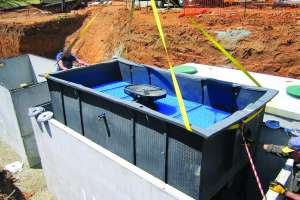
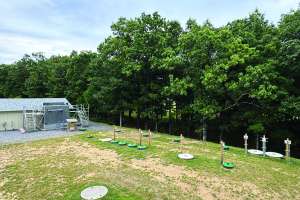
Solution: The Earthtek Environmental AMBR moving-bed biofilm reactor was selected due to its simplicity, its minimal operation and maintenance requirements, and the cost-effectiveness of the treatment process for treating high-strength wastewater. The system is an aerobic process utilizing long-lasting fiberglass tanks. The system contains thousands of polyethylene media pieces, which provide a large surface area for bacteria to attach and grow. The bacteria consume organic material and automatically slough excess biofilm to adjust to variable flows and loading. The system includes a primary tank to settle solids and provide anaerobic digestion of waste sludge; two FRP aerobic MBBR tanks; one clarifier tank with sludge pump, two blowers (active and standby); chlorine tablet disinfection; a pump tank; and a spray irrigation field for disposal of the treated effluent.
Result: The system has enabled the Miami Nation to achieve needed meat processing capabilities by providing efficient wastewater treatment and operational efficiency in a challenging environment. 800-972-9940; www.earthtek.com

Advanced treatment unit a fit for tight coastal lot
Problem: Watch Hill, Rhode Island, is a beautiful coastal village in the town of Westerly surrounded on three-sides by water. Many consider the area as the ideal summer resort vacation location due to the proximity of major cities New York, Boston and Providence. However, most lots are compact in size, especially those adjacent to coastal areas. One four-bedroom home with shingle siding was located on one of those very small lots. The only open space was for a septic system that had a total usable area of only 18 by 20 feet.
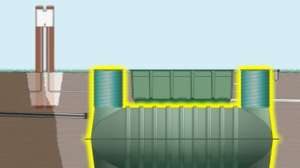
Solution: Cherenzia Associates designed a FujiClean USA CEN5 compact advanced treatment unit with enhanced nitrogen reduction. The system was installed by Wright Excavating.
Result: The system brought treatment limits well below acceptable thresholds. Crystal clear effluent is then fed to a 24-inch-diameter pump basin dosing a Geomatrix GST 12-feet long drainfield. 207-406-2927; www.fujicleanusa.com

Aerobic module helps revitalize septic system and leachfield
Problem: A homeowner had a failing septic tank and leachfield in the winter at their historic century-old home in northeast Ohio. The failing three-tank septic system and leachfield, due to plugged soil, caused standing septage water and noxious septic odors. The county suggested a sand mound or new leachfield. These two options would either put a very large sand mound in front of their home or force the homeowner to cut down a mature tree lot on the property. The homeowner refused to agree to either of the proposed options.
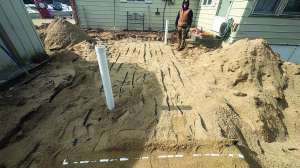
Solution: The county health department invited IMET to install its aerobic biological module (which did not have state approval at the time) to demonstrate complete remediation of the existing failing septic system and plugged leachfield. The “drop in” module was installed directly into the second tank of the septic system in just under 3 hours. The system only requires immersing the module in the septic wastewater and connecting its diffuser to a small, quiet, energy-efficient air pump.
Result: Within six months the failing system was converted into a well-functioning septic system, and the leachfield was dry and green. The homeowner has never needed to pump the septic tank and has never experienced any odor, while having a lush green and dry lawn to enjoy. Grab samples from the distribution box showed BOD less than 10 mg/L and TSS less than 5 mg/L. 216-906-1066; www.imet.net

Bacterial generator solves wintery effluent discharge issues
Problem: French Road Cellars is a 20,000 cases per year custom-crush winery that makes a wide variety of wines and ciders on Michigan’s Leelanau Peninsula. The winery’s process water went to an old septic tank followed by two bottomless tanks that were used to disperse their effluent. Because the effluent could reach BODs in excess of 10,000 mg/L, they had clogged and were overflowing. They had no room for a formal leachfield and operators didn’t know what to do.
Solution: SludgeHammer came in and installed their Aerobic Bacterial Generator equipment to improve the wastewater quality. The technology recovered the percolation pits and the system was no longer overflowing. But the Michigan Department of Environmental Quality did not like putting that much water into the soil in such a concentrated manner. SludgeHammer worked with DEQ to create a scaled-up system that could improve the quality further so an alternative disposal could be found.
Result: The new treatment system was able to take advantage of the bottomless tanks by cementing them in so they could add capacity. New tanks were added, and installers used a horizontal drill to take the effluent up under the parking lot and onto a hill in back of the property. They then plowed in a subsurface drip field and the hillside has been accepting all wastewater for the last 5 years with no problems. 231-348-5866; www.sludgehammer.net
Continue reading for free