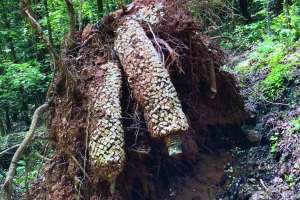
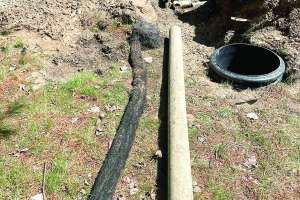
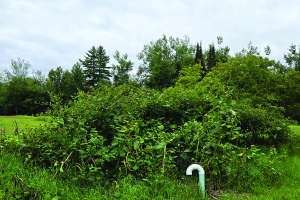
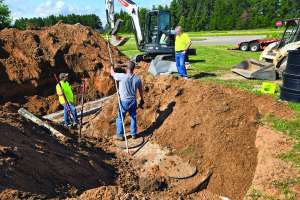
Many trees, shrubs and plants are known to have roots that seek water in pipes and other septic system components. Some plants, especially those with deep root systems, can cause soil expansion and contraction as they absorb water and moisture. The list included is not comprehensive, but provides examples known to cause issues with piping and components related to septic systems and other buried infrastructure.
Japanese knotweed
An invasive species that has been introduced to most of the contiguous U.S. and grows very aggressively in disturbed areas. Japanese knotweed can interfere with drainage pipes and other structures, blocking and sometimes lifting pipework and clogging sumps and drainage pits. The plant is extremely aggressive and strong, having the ability to even grow through concrete. Other underground infrastructures are at risk, such as cabling and water pipes. Getting rid of Japanese knotweed is very difficult. Typically, a herbicide is used, although it can potentially be done organically by digging it up, burning it or smothering it with a tarpaulin.
Ivy plants
A ground cover that covers gaps in landscaping and is typically planted close to buildings and homes. Even though they make great ground coverings, they are known to clog pipes in septic systems. A characteristic of the ivy plant is its ability to grow very quickly. It is estimated that ivy, when left uncontrolled or pruned, can grow to three times its average size in as little as four months. While this plant grows on the walls, it will eventually find its way into any crack or crevice including the septic system. Once the ivy is inside the pipes, it will continue to grow aggressively and cause blockages, damage to the surrounding pipes and slow drainage.
Boxwood shrubs
Frequently used around a home or yard for aesthetic value. Due to its common proximity to the home and its large, shallow root structure it can cause potential problems with building sewers leaving the house. As the boxwood’s root system grows over the years, it will move outward and eventually find its way to the weak points in the septic system or foundation. Once the roots find weak points, they will burrow into them, causing extensive damage as the roots continue to grow away from the center of the shrub.
Holly bushes and shrubs
Often called foundation plants and are typically planted along a home’s foundation. The proximity to the home’s building structure can cause damage if the plants are not receiving the right amount of water and nutrients. The location near the home may prevent these plants from getting the nutrients and moisture they need. This lack of nutrition and moisture causes the holly tree root system to branch out. The roots will find a way inside, either via a crack or through a weak pipe joint. Once inside the system, the roots will continue to grow and move toward the water, causing extensive damage to the piping and sewer systems. These invasive holly tree roots can even cause new plants to grow right inside the septic systems. When this happens, the plants can block the pipes or cause extensive damage.
TROUBLE TREES
Most trees close to a septic system could pose a risk if they find their way into a component. The list below highlights species known to have aggressive rooting systems.
Willows
This includes a number of varieties ranging from black willow to weeping willow. The willow’s natural habitat is one that is moist and rich in nutrients. When a willow is planted near a septic system, it instinctively tries to get water and nutrients wherever it can. The tree roots can cause major damage to the septic system.
Eucalyptus trees
These trees are known for their rapid growth and height. Their aggressive roots can extend far and wide of up to 100 feet, making them one of the leading contributors to septic problems. As these roots invade pipes and septic tanks, they can exert immense pressure, causing cracks and rupture.
Ficus trees
Also known as fig trees, they have aggressive roots capable of infiltrating even well-maintained pipes. Once inside, they can cause significant damage and clogs.
Italian cypress
These trees are tall and slender with roots that can extend deeply into the ground, searching for water sources where they can compromise pipes and other underground components.
Bamboo
Known for having an extensive root system that can become problematic for pipes. Running bamboo species, in particular, can send out invasive rhizomes that disrupt pipes and drainage systems.
Magnolia trees
Magnolias are another species with problematic root systems which often cause septic and structural damage to a home. Their root systems tend to grow along the surface instead of growing deep into the ground. The combination of the flexibility from the rope-like roots and the shallow surface growth makes it easy for these trees to damage the septic system. The pliable roots will find cracks and leaks and work their way into the pipes as they seek the closest water source.
Poplar trees
A common tree with extremely invasive root systems that grow rapidly near the surface, which makes them bad choices for planting near homes. Even if you plant a poplar tree well away from a home, it can still cause significant damage because the root system can grow two to three times the height of the tree. The average height for a poplar tree is between 80 to 150 feet, which means the roots can grow anywhere from 160 to 450 feet out from the base of the tree.
Birch trees
Birch tree varieties can grow anywhere from 40 to 50 feet tall with a rooting system two to three times the height of the tree. Without the right amount of space, the roots will make their way into the septic system components. Once the roots find their way into the pipes, they will continue to grow outward, despite their location inside the pipe. These invasive birch tree roots can cause blockages and damage the pipes
Oak trees
Oak trees can spread their roots to be four to seven times wider than their crown, which can cause damage to nearby foundations. Despite the slow-growing oak tree root system, they can quietly be wreaking havoc on a home’s structure and septic system. An oak tree’s root system contains a main root known as the taproot. The taproot grows straight down into the ground and provides nutrients and moisture to the tree as it grows.
As the tree matures, supplemental roots will grow laterally from the tree. These roots are the ones that cause problems to septic systems. They can often grow up to 100 yards out from the base of the oak tree. These roots will move and work their way into cracks within a septic system and continue to spread, causing damage and blockages to the septic system.
Property owners and landscapers should research to control plants and trees on the property and plant accordingly keeping these things in mind:
- Do not leave invasive and volunteer plants unchecked.
- Measure the plant’s distance from the home to ensure that the root system will not impact the piping or the house’s foundation.
- Know where the septic system and pipes are in the yard and leave enough space for trees and plants to grow.
- Make sure the soil and location for the trees and plants can provide enough water, nutrients and sunlight to prevent the roots from going in search of these necessary items.
- Ensure all the pipes, sewer systems and home foundations do not have leaks, cracks or weak joints where roots can find their way in and grow.