In-kind donations provide immense support for charitable and nonprofit agencies everywhere. The gift of a septic system, including future maintenance and upgrades, has helped the Saving Grace Pet Adoption Center save 30,000 animal lives over the past quarter-century.
The shelter
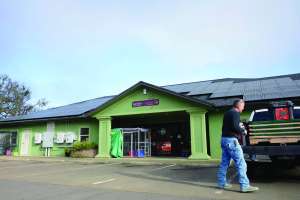
Dedicated citizens of Douglas County in 2001 founded Saving Grace in Roseburg, Oregon, to provide adoption services and quality animal care. Leveraging an opportunity to move into a larger 13,000-square-foot facility on a 5-acre lot in 2011 allowed the agency to care for even more adoptable pets. However, to carry out its mission, the center required a septic system with the capacity to support the needs of 27 staff members, more than 500 volunteers, visitors and dozens of pets-in-waiting.
Filling a need
The national headquarters for Orenco Systems happens to be located about a 10-minute drive north of the Saving Grace shelter. In 2011, the Seven Feathers Casino Resort, located about a half-hour drive south of the shelter, was looking to upgrade its onsite septic system. The wastewater treatment system consisted of a dozen AdvanTex AX100 treatment units.
“These had been installed as part of a demonstration system way back in ’04 when the product was new and the resort was smaller,” says Geoff Salthouse, Orenco product manager. “We were in touch with the client, monitoring the system and at some point a light bulb went off between all the parties that one of these older units could be used at Saving Grace, which is a phenomenal organization with a lot of great volunteers.”
Salthouse says the product withstood the test of time after seven years of service and proved to be the right solution for Saving Grace. After replacing the textile filter material, the decommissioned unit was deemed fit for duty. With a designed capacity of 25-50 gpd per square foot, the unit would provide more than enough wastewater treatment capacity for the high-volume flows at Saving Grace.
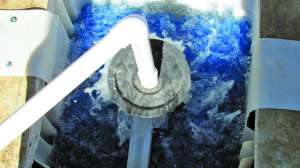
AX100 units operate on the same principles as the smaller AdvanTex residential treatment systems. They treat influent to better-than-secondary standards, including nitrogen reduction where required.
The team
A team of industry partners worked to make the project happen, including installer Rising Soil Consulting; system designer i.e. Engineering, which worked with the Douglas County On-Site Wastewater Department to determine the drainfield’s size and treatment; Beckley Excavation and TerraFirma, who excavated and installed the pressurized drainfield; Willamette Graystone, which provided septic, recirculation and dosing tanks; and Vision Electric.
Dave Rising, now retired, was a licensed septic installer and Orenco-certified AdvanTex installer. He donated a portion of his company’s time to install the system, and coordinate the various contractors.
“I installed the AdvanTex components, splitter valve, pumps, pump vaults, valves for the recirculation, dosing tank pumps, valves, the automatic distributing valve at the drainfield, and the risers on the tanks,” Rising says.
Installation, commissioning and maintenance
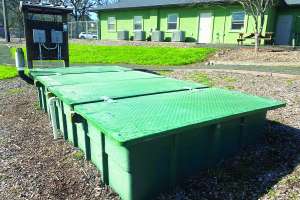
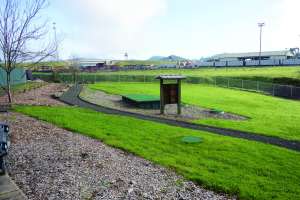
The AX100 was installed about 25 feet away from the main building, near a gravel exercise path for adoptable dogs.
Following installation, workers followed a strict maintenance schedule, visiting monthly to inspect the liquid levels in the septic and recirculation/blend tanks, checking the Biotube filter and cleaning as necessary, reading hour meters and event counters for the unit’s pumps and confirming operation of the system valves. Influent and effluent samples as well as the voltage and amperage of the pump were checked quarterly. Effluent distribution inside the pods, pod pressure and recirculating valves were checked twice a year. Each year, the crews also recorded sludge and scum accumulation in the tank, flushed the piping and inspected pump components, cleaning as needed.
Since the original commissioning, certified maintenance crews have continued to visit the shelter annually to check the AX100 and perform preventive maintenance.
“Orenco has been great, and they are always very helpful when questions arise,” says Cyn Demers, Saving Grace development and communications coordinator.
An option for an upgrade
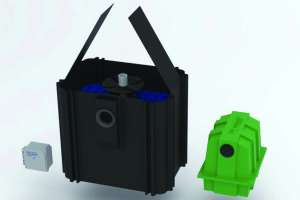
In 2024 Orenco was looking for an opportunity to test the installation of its newly designed lids for the AX100. The original AdvanTex lids were made from a closed-cell wood core encased in fiber-reinforced polymer and designed for a service life of a decade or more. The new design employs foam core encased in FRP and is designed for a service life in excess of 20 years.
“We asked our local service division if we had any of the old 2004 units operating in the area,” Salthouse says. “They gave me a list and we immediately approached Saving Grace to pilot our retrofit kit.”
The shelter agreed to the pilot, which amounted to a donation of about $5,000-$2,500 for each lid set.
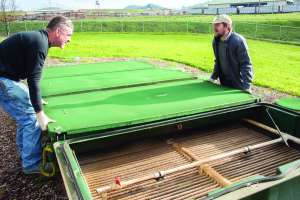
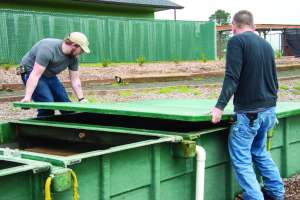
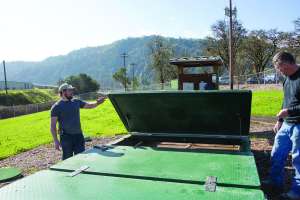
In spring 2024, Salthouse led a team of technicians from Orenco to install a pair of new lids on the shelter’s AX100 using a prototype retrofit adapter kit. The crew first removed the original hardware that fastened the lids to the tank, removed the lids, scraped off the old gaskets and cleaned the surfaces with acetone. Then they adhered the new hardware fixtures to the fiberglass tank to install the new lids. Salthouse notes that the experience resulted in an improvement to the retrofit kit design.
“The bolts that secure the lid attach to a fiberglass flange on the original pod. We determined that the bolt needed just a little more meat to screw securely into the flange, so we added a bolt catch made of plastic and fiberglass to make sure that everything was secure and provided the fit we wanted.”
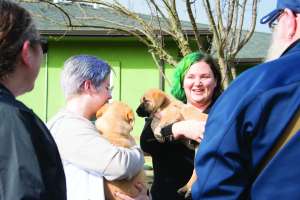
The team devoted extra time to the pilot installation, including spending some time with the shelter’s furry inhabitants. However, Salthouse says the retrofit installation of the lids has been streamlined to about two hours per pair.
Supporting the shelter’s future
In addition to serving the needs of staff, volunteers and animals, the facility is in constant cleaning mode, according to Jennifer Barta, Saving Grace executive director.
“We have to clean the kennels, wash the dishes and keep our hospital facilities sanitized,” she says. “Cleanliness is paramount for a shelter and all of that wastewater must be treated. When word got out that we needed a septic system, supporters like Orenco assisted us. It’s wonderful to be part of a community that just steps in when they know we need help.”