Tampa Electric (TECO) serves about 2,000 square miles in West Central Florida including nearly 1 million customers. In March 2023, TECO asked Lakeland Septic to inspect the existing septic system at its newly acquired Mulberry, Florida, location.
“There was an existing system onsite from the previous occupants, but after we inspected the system, we determined it would not be sufficient for what TECO was trying to do,” says Josh Williams, owner of Lakeland Septic Company. “There were several control panels that were in rough shape. The drainfield and existing tanks that were there didn’t meet the code for what Tampa Electric was going to need.”
Site conditions
The soil is a candler sand with a load rating of 0.80. “It’s exactly what you want,” Williams says. “That’s the stuff we buy when conditions are bad.” While candler sand works well for draining, it proves to be a challenge for setting tanks.
System components
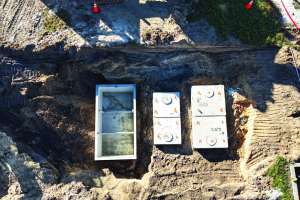
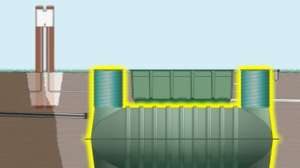
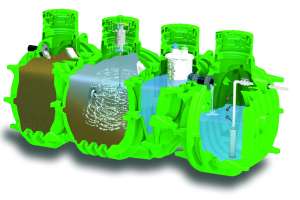
- 2,500-gallon concrete septic tank and a 1,250-gallon concrete septic tank manufactured by Florida Septic Inc., which are set in series to accomplish the required 3,750-gallon capacity. Both tanks are traffic-rated with Polylok 6-inch filters.
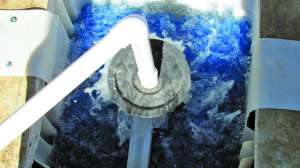
- 3,000-gallon dosing pump tank with two 1/2 hp Liberty pumps controlled by an SPI duplex control panel.
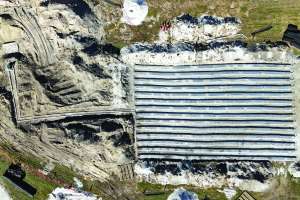
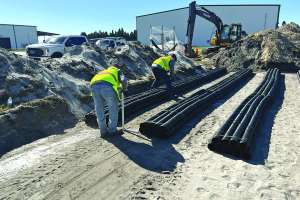
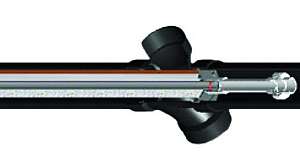
- 3,570 square foot drainfield including 14 lines in two separate zones of seven lines each. The drainfield uses an ADS Septic Stack Pipe System with an ADS Septic Stack 9-pipe bundle.
- Each line has a 1 1/4-inch PVC lateral run-through with 3/16-inch holes drilled every 5 feet.
Planning process and delays
Lakeland Septic started planning the project in March 2023, but the work wasn’t completed until November 2024. “This job was postponed I believe six times. This project tested every bit of patience that we had,” Williams says. “It was a very long process to actually get to do the work.”
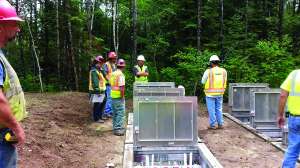
The project experienced delays due to the planning process and Florida weather. “Tampa Electric is very, very thorough on safety and as far as whatever OSHA’s standards are, they add probably 10 more steps on top of that to ensure safety because they’re a big company,” Williams says.
One of the safety setbacks involved a discussion over the use of a trench box. TECO requested that Lakeland use a trench box to set the tanks, but Williams says that wasn’t possible because of the way the tanks are set on the crane. He was able to use his knowledge to convince decision-makers at TECO about the proper way to install the tanks.
Florida’s wet climate created additional delays. Williams postponed tank installation day twice due to the amount of rain the area received in the days before the scheduled install. “If you did get the tanks in the ground, they could easily float. It doesn’t matter how much they weigh, they absolutely will float if you have enough water,” Williams says. “It becomes very dangerous too. Everything caves in when you have water.”
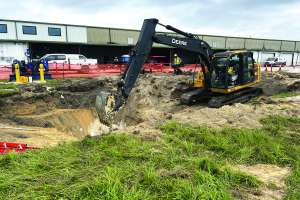
Williams decided to dewater for five days before setting the tanks. Working with TECO, they hired a company to conduct the dewatering process which involved drilling around 40, 20-foot well points.
Tank installation
When tank installation day finally arrived, the company faced another unexpected delay. “There were some cables that we were specifically told to use that TECO approved and Florida Septic didn’t bring those, they brought another set. So, that put a stop to everything for the day,” Williams says.
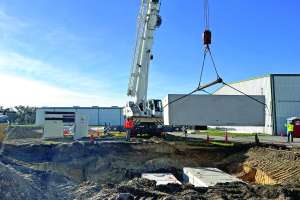
After the mix-up, everything ran smoothly. Florida Septic delivered a 2,500-gallon concrete septic tank and a 1,250-gallon concrete septic tank. The tanks are run in series to accomplish the required 3,750-gallon capacity. Both tanks have Polylok 6-inch filters with 48-inch risers on perforated 24-inch pipe.
“We had to go with traffic-rated septic tanks that could help up to the pressure and weight of being buried deep,” Williams says.
The tanks were set at 17-feet deep. “We constantly had cave-ins. No matter how we sloped it, the sand just doesn’t hold together at all because it’s very fine,” Williams says.
Drainfield installation
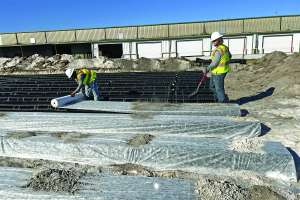
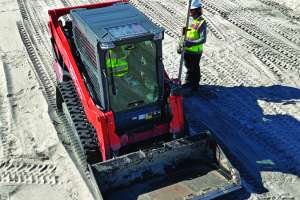
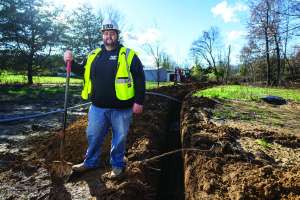
Prior to installing the new drainfield, Lakeland removed the old chamber materials, hauled the materials away and cleaned up the old drainfield. Then there was the process of digging, followed by grading it with grade rods as an excavator dug out the area to lay the drainfield in.
Lakeland installed a larger drainfield than what the project required, a 3,570-square-foot area and used a low-pressure dosing system. There are 14 lines in two separate zones. Each zone has seven lines and is 1,785 square feet. The discharge pipe coming from the pump to the drainfield is a 3-inch schedule 40 PVC pipe. Each zone has its own pump and its own 3-inch main line. That 3-inch line tees off into each line, which has a 1 1/4-inch line going down through the 9-pipe bundle. The 1 1/4-inch on every line connects to the 3-inch line at the front of the drainfield to provide equal distribution. That 1 1/4-inch line has a 3/16-inch hole drilled every five feet to create the right amount of pressure throughout the system. At the end of every line, there’s a 1 1/4-inch ball valve, which allows the system to clean the lines and check the pressure.
Williams says this system design was perfect for the large application with high flows because it equally distributes the water through the entire drainfield.