
Who knows what COLE means or stands for? I do!
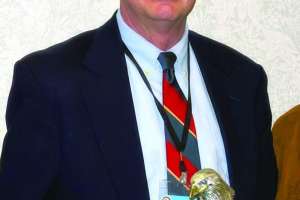
I met Bob Kendall for the first time in person at the first “Pumper Show” in 1981. This is how it all started.
I’ll never forget that day in 1979. I was in our Cape Cod Biochemical company “office,” which then consisted of a couple of desks in my partner Lew Garston’s house on Cape Cod. The phone rang, which was a big deal in those days. The call was from our CCLS dealer in Three Lakes, Wisconsin, Pete Lawonn. I remember it like it was yesterday.
Pete was trying to sell a vacuum truck, and he was striking out in all the usual outlets. So, a friend of his who would come to Three Lakes in the summers with his family, suggested they start a trade journal to sell the truck. Pete wondered if we’d like to advertise in it.
That friend, who came to Three Lakes with his parents in the summers and would come up to help Pete with a snow shovel during the plowing season, was Bob Kendall.
We knew Pete and Bob’s trade journal was a farfetched idea, but we agreed to take out a half-page ad in their paper. We knew there would only be one issue. We wished them luck.
The charter issue
And there COLE Publishing began. If memory serves, in September of 1979 the first issue of the Midwest Pumper arrived. It was very primitive. It was very brief. It had almost no editorial content. It had one hand-drawn, half-page cartoon: “Pumpin’ Pete.” And it had one half-page ad. Then surprise! A second issue arrived. Then month after month the Midwest Pumper would come. At that point the paper was gaining traction.
We were more than happy to advertise in Pumper. Until that time, we had been generating our leads by direct mail. We spent six months compiling the only national mailing list of septic contractors. At one time we had every telephone directory in the country. Over 5,000 books. We shared our mailing list with Pete and Bob, and shut down our mail room. (If I ever saw another “Postage Paid Reply Card,” I would scream.) But the paper was starving for content. So we provided content. They printed anything we wrote. Some of it was nothing more than a sales pitch. But it was something to read. The paper gained more advertisers, and it was on the road.
Expansion
The Midwest Pumper was followed shortly by the Eastern Pumper, then the Western Pumper. It went from primitive to the glossy, sophisticated publication that Pumper is now; the standard of the industry. As the years went by, Bob launched many more industry-related trade journals, including Onsite Installer.
So how did the shows start? Well, one month I was talking with one of our Kentucky CCLS dealers. He said what we needed was a trade show for pumpers. A place to gather, share ideas. Again, it seemed farfetched to me, but it was content, so I put it out there. The response was pretty good, so we put together more content, a survey to gauge interest. Should there be a show? Where? What time of year? How long? Response was huge, and the Pumper Show was born. Opryland, Nashville, 1981. 25,000 square feet of exhibit space. Beer distributed from a roving golf cart. It was all pretty raw, but people loved it. And wanted more. And Bob wanted more.
A born innovator
I don’t think I’ve ever known anyone who was such a fountain of ideas. Nothing was beyond the scope of his imagination; nothing was out of reach. His business model was to be fair to everyone. No deal was a good deal unless it was a good deal for everyone. He always gave back. And at the Pumper Show that meant a party. The first one was a banquet. And from there the concerts grew. Now major headliners play at the WWETT Show in Indianapolis. And it has evolved into one of the largest shows in the country.
Now decades later, dozens of shows and concerts, and hundreds of papers later, the liquid waste industry owes a huge debt of gratitude to the founder of this great industry. The man who in 1979 gave 13,000 disconnected contractors a place to interact. And just look at it now.
Bob was a true visionary, but he was totally grounded. He always had a twinkle in his eye and a story to tell. He was a dear friend to so many of us. Like so many, I’m proud to have been there at the beginning, and I’m proud to call Bob my friend.
I’ll never forget the last thing Bob said to me as we were reminiscing about where the septic industry began and what it had become. He said, “Rick, we did a lot of things right.” That we did, my friend, that we did. He certainly will be missed.
EDITOR’S NOTE: “COLE” is an acronym for Chain Of Lakes Enterprises, a nod to the small lake-abundant northern Wisconsin town where Bob’s business was launched.
Continue reading for free