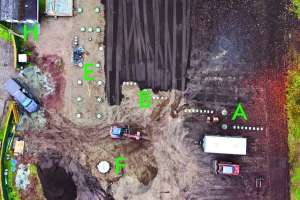
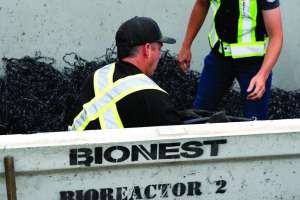
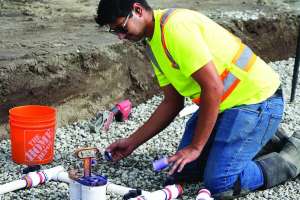
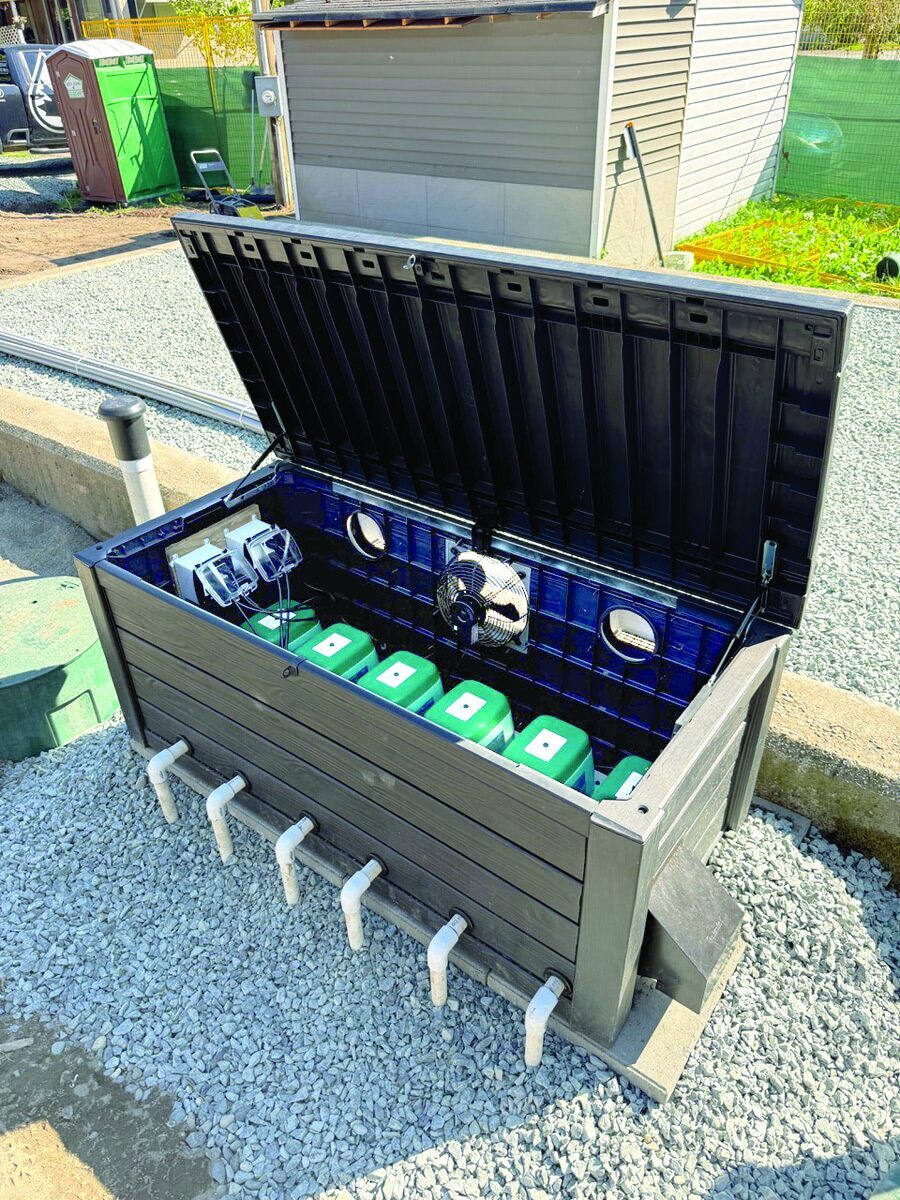
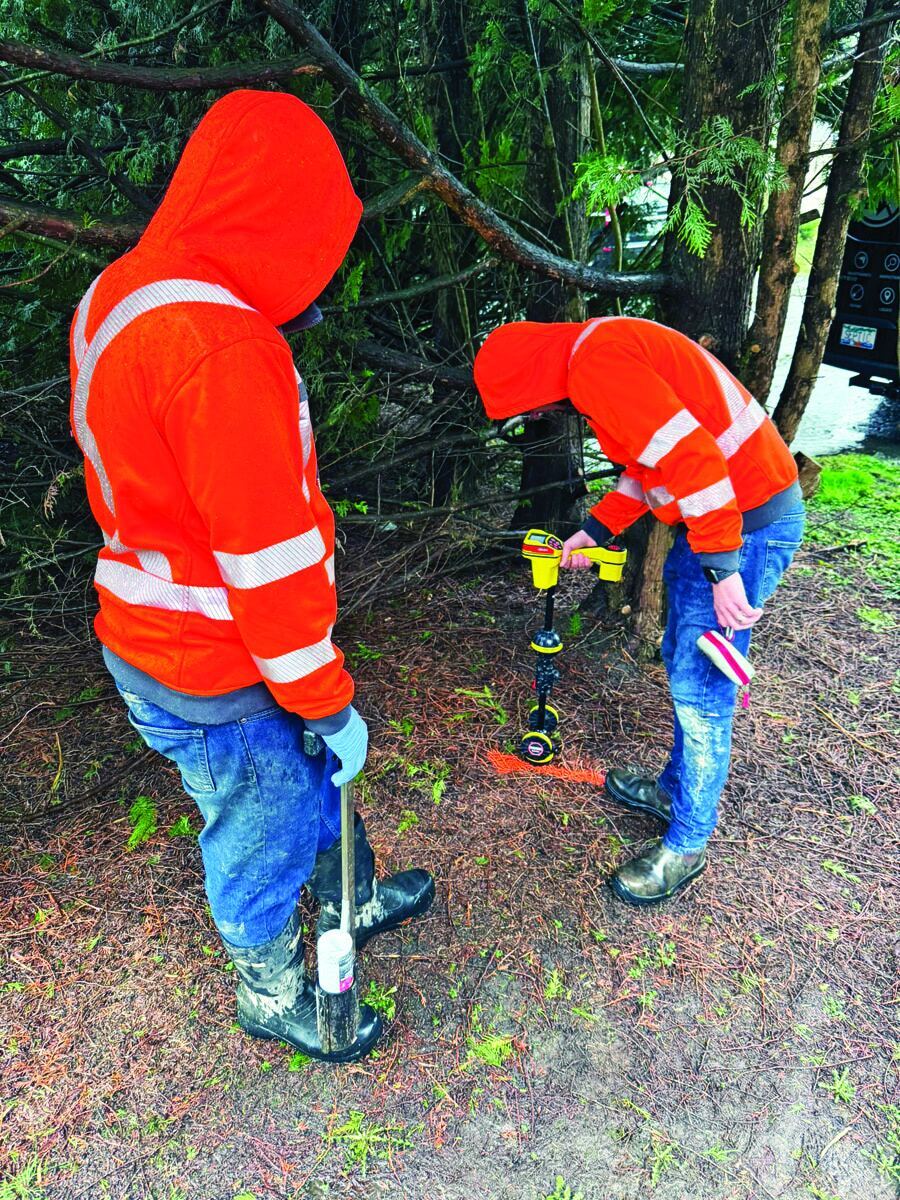
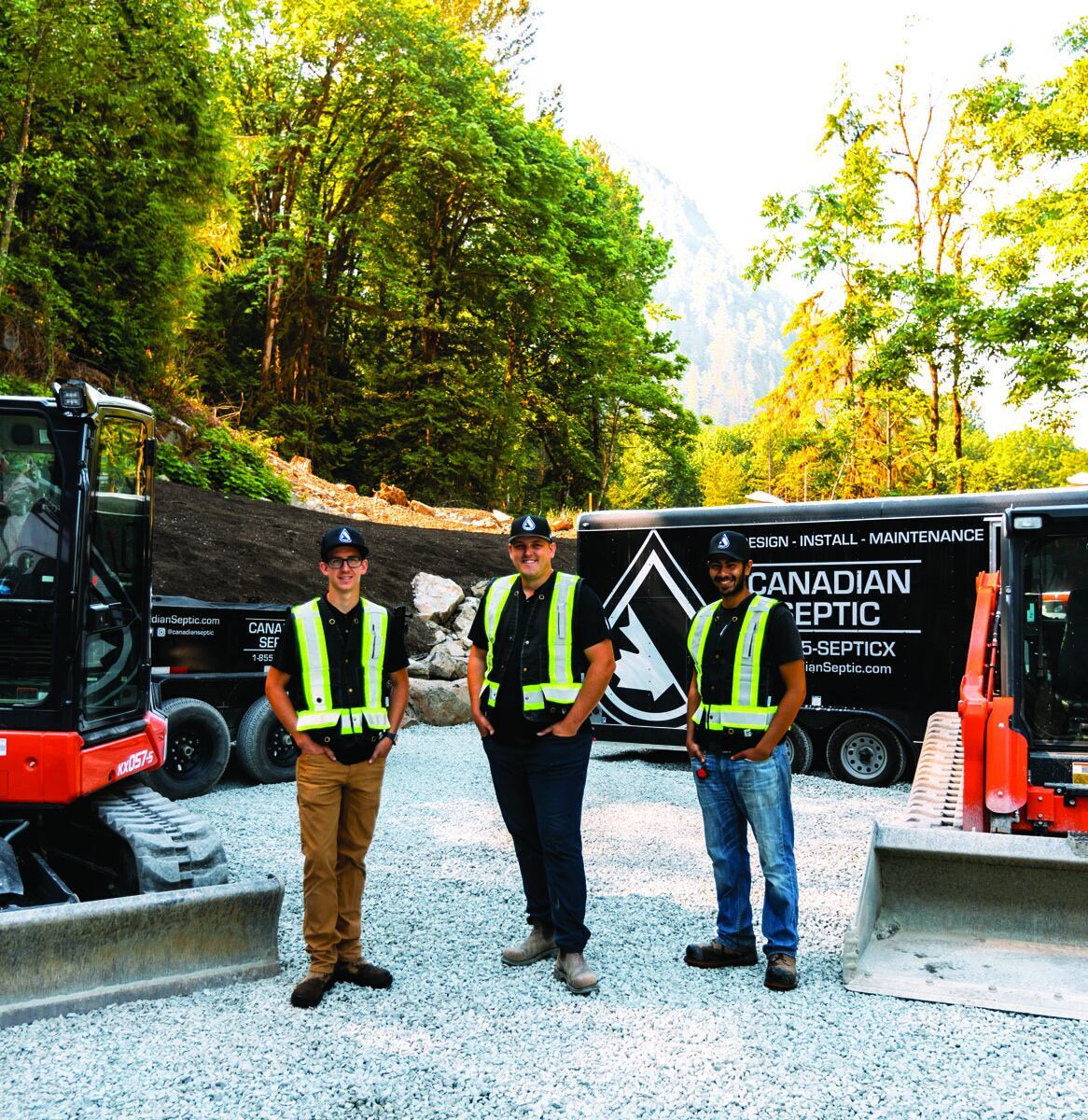
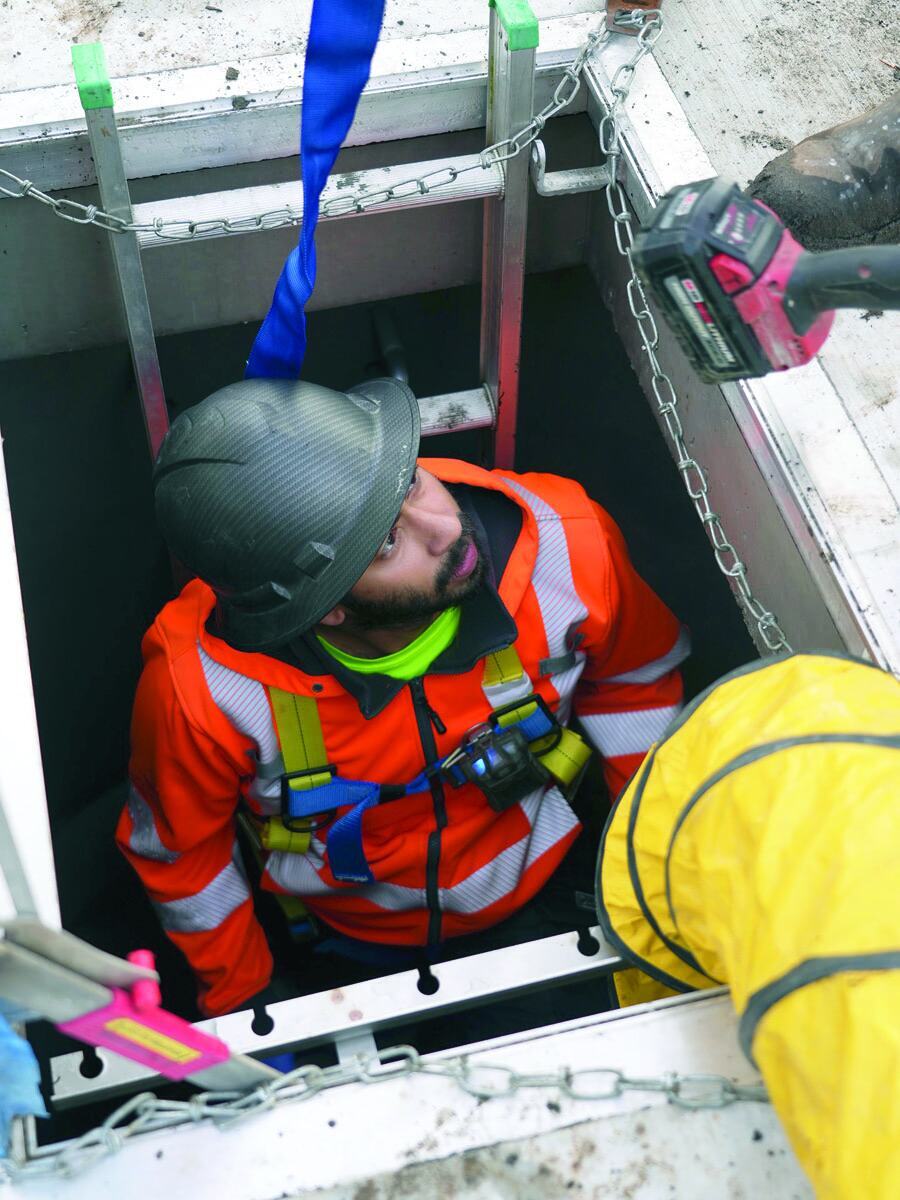
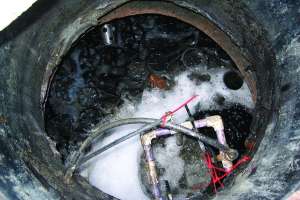
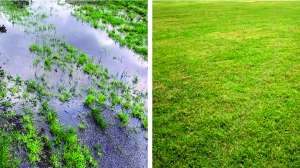
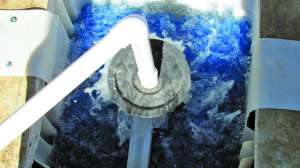
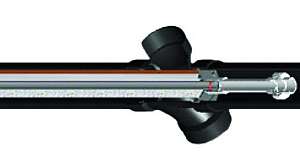
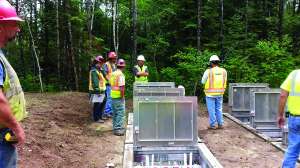
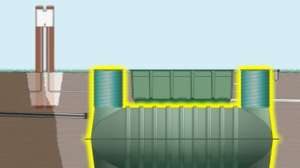
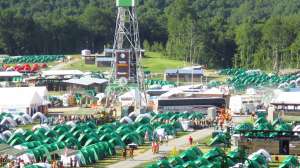
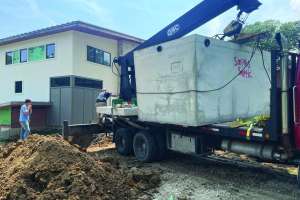
The work site on Oct. 23, 2025. A: Mobile home drainfields. B: RV park drainfields. C: Rotating biological contactor’s footprint. D: Mobile park tanks and 12-inch dewatering port at the foot. E: RV park tanks and aeration box being plumbed. F: Custom sump. (Photos courtesy of James Stiksma)
Between June 2023 and September 2024, an old and poorly maintained rotating biological contactor serving a mobile home and RV park in Langley, British Columbia, was discharging effluent that exceeded permit limits.
The Ministry of Environment and Parks fined the company operating the facility and issued a noncompliance order. Management hired Craig Regier, P.E., of Cleartech Consulting in Vancouver, to design a solution. Canadian Septic in Langley won the bid to decommission the RBC and install a dual treatment train for the 29 RV sites and 30 mobile home pads.
Delays arose from the onset. “The property owner had died unexpectedly and no one had any infrastructure records for the site,” says James Stiksma, owner of Canadian Septic. “My team flew blind throughout the project.”
Instead of beginning to install the bioreactors from Bionest and the stone-and-pipe seepage beds, Stiksma and employees Arien Brouwer and Tom Daniels spent days locating and inspecting sewer lines, referring to old GIS photos and guessing what was beneath the risers.
Stiksma hired Heidelberg Contracting for bulk excavations. Work began on July 8 and lasted through October. It brought surprises and challenges that included not disrupting the park’s septic service, but the install ended successfully.
The nine-acre park has gray sand soil with a percolation rate of 1 minute per inch.
System components
Craig Regier, P.E., designed two systems to handle a total of U.S. 9,600 gpd. Tank volumes are Imperial gallons (1.2 U.S. gallons). Major components are:
Mobile Home Park: 5,000 U.S. gpd
3,560-gallon single-compartment septic tank. All tanks are concrete from Galcon Precast with Polylok safety screens and risers cast into the lids.
2,500-gallon single-compartment septic tank with A100 effluent filter and alarm (Zabel, a division of Polylok)
2,500-gallon single-compartment tank with BN4000 bioreactor (Bionest Wastewater Treatment Solutions)
2,500-gallon single-compartment tank with bioreactor
1,700-gallon dual-compartment tank with bioreactor and settling chamber
3,560-gallon dose tank with quad ultraviolet lamps (Live Wire Solutions) and duplex 6/10 hp FL62 effluent pumps (Liberty Pumps)
Six HP-100 septic aerators (Hiblow USA)
EZ In-Site Bluetooth duplex panel with C-level transducers (SJE Rhombus)
Two 150-by-18-foot—wide pressurized stone-and-pipe seepage beds
RV Park: 3,600 U.S. gpd
2,000-gallon single-compartment septic tank.
2,000-gallon dual-compartment septic tank with A100 effluent filter and alarm
2,500-gallon dual-compartment tank with BN3000 bioreactor
1,700-gallon dual-compartment tank with bioreactor and settling chamber
2,000-gallon dose tank with dual ultraviolet lamps and duplex 6/10 hp FL62 effluent pumps
Five HP-100 septic aerators
EZ IN-SITE Bluetooth duplex panel with C-level transducers
Two 150-by-10-foot pressurized stone-and-pipe seepage beds
Sump:
16-foot by 5-foot-diameter concrete sump with antiflotation flange
Because hydraulic flows spiked when it rained, Brouwer and Daniels inspected every gravity sewer line and connection for leaks using a Hathorn camera system. They found leaks in the collection mains from the RV park and groundwater infiltrating an undisclosed 1960s dual-compartment septic tank.
The mobile home park had four 4-inch gravity mains that transitioned to an 8-inch main draining into the smaller compartment of the 1960s tank. From there sewage was pumped to the RBC. “The plumbing was installed intentionally to bypass the larger compartment, which surprised us,” says Stiksma.
Another surprise was finding the top of the tank 10 feet down. “When the last system was installed, we believe they brought in 3 feet of septic sand and 1.5 feet of drain rock and topsoil to get above the groundwater and clay.”
The RBC, installed in 1998, had two force mains feeding the entire drainfield, but only three of the 18 trenches were working, as evidenced by the green grass on them. To maintain the park’s septic service, Stiksma temporarily redirected effluent from the RBC’s pump chamber to the first three rows of dormant treatment chambers, enabling the wet trenches to dry out. “Nothing was wrong with the chambers, but they had to go because we needed the additional infiltrative area between the rows for the seepage beds,” says Stiksma.
A row of mature conifers blocked the only way in for equipment and almost touched sagging power lines. Stiksma hired a forester to remove the trees and a locating company to mark utility lines, making it safe for Brouwer and Daniels to extract the stumps.
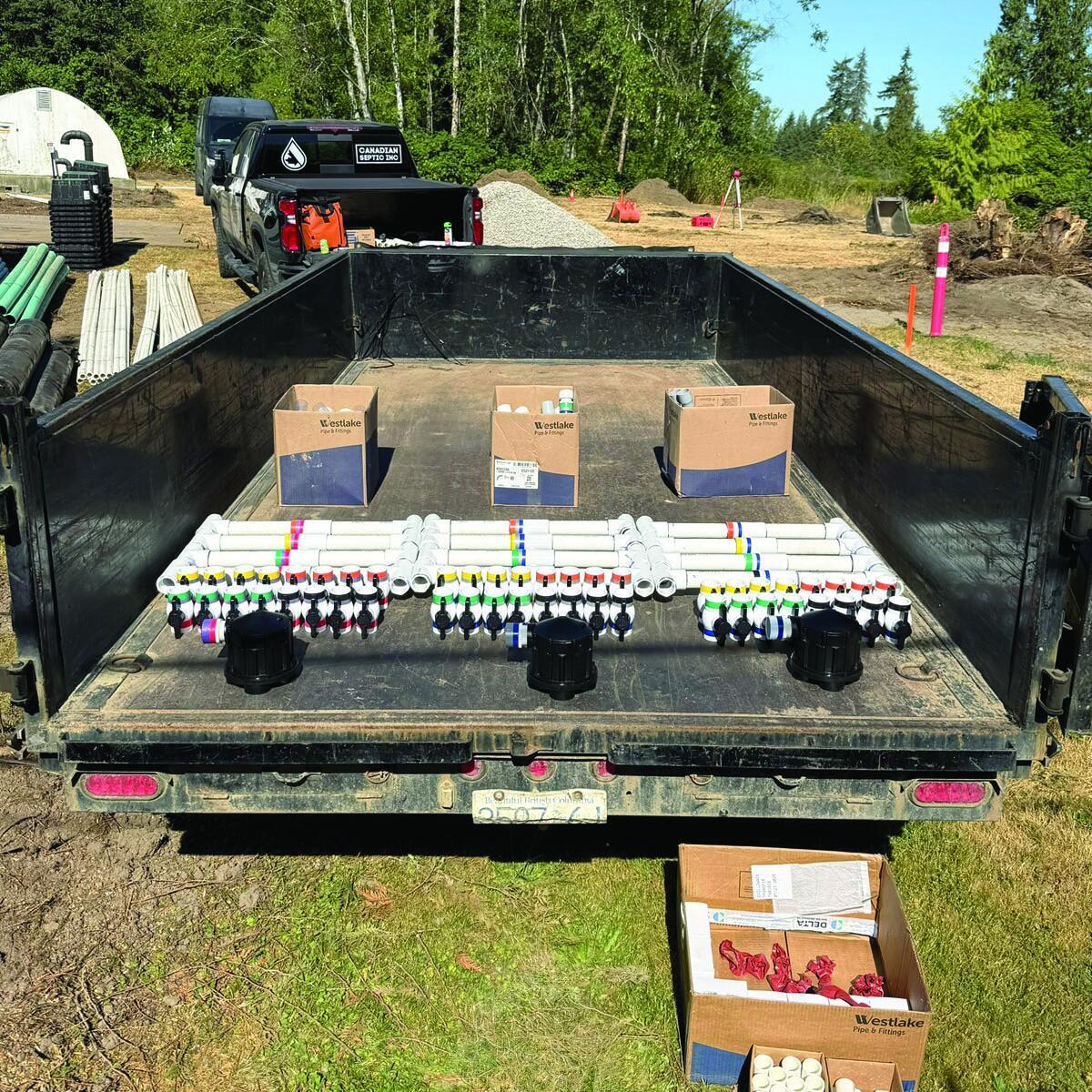
By the end of July, Stiksma had prefabricated numerous fittings for the 2-inch PVC force mains including ball valves, 12-by-2-inch risers with tees, and reducers to 1.25 inches. To assist future maintenance providers, he color-coded the connections. “Blue tape indicates mobile home pipes, white tape is indexing valves, and yellow, red and green tape is clean-outs for the zones,” says Stiksma.
To prep the first mobile home drainfield farthest from the RBC, Daniels used a hydra bucket (CMP Attachments) to peel off three inches of turf. “The attachment paid for itself on this job by grinding up and reducing the volume, while conserving topsoil so we didn’t have to haul in as much,” says Stiksma.
The twin mobile home seepage beds each had four zones with two-zone indexing valves feeding four 75-foot 1.25-inch laterals. The 32 laterals each had 25 hand-drilled 1/8-inch orifices spaced 36 inches apart. Heidelberg Contracting covered the fields with washed round stone using a Hitachi ZX245 excavator, but bringing it in through the opening made by removing the hedge involved a surprise. Stiksma discovered a fiberglass tank used for fire suppression smack in the middle of the path. He covered the tank with road plates to prevent heavy equipment from crushing it.
While the team completed the second mobile home bed, Ace Tank Service emptied the RBC’s concrete tank chambers using two pumper trucks. Then Heidelberg spent the first week of August demolishing the contactor’s fiberglass enclosure and removing the 5-ton digester, while sewage continued to travel through the three clarifiers to the pump chamber.
By mid-August, the mobile home tanks were set in series, plumbed and providing temporary service for the entire park. To dewater the excavation for the second set of tanks, Stiksma drilled holes near the bottom of a 12-inch corrugated pipe, set it between the two-tank series and backfilled with gravel. The pipe also would enable pumpers to check groundwater levels before servicing the tanks.
As the second drainfield was backfilled, Brouwer and Daniels ran conduits and air lines. Heidelberg hammered holes in the bottom of the RBC’s concrete tank and backfilled with spoil from the new tank excavations.
Meanwhile, summer temperatures made the bioreactors’ aerators overheat. “We cut an opening in the back of the outdoor PVC storage box and installed a 10-inch exhaust fan to cool it,” says Stiksma.
A month later, constructing the twin RV drainfield was underway. Each of its four zones had four 75-foot 1.25-inch laterals. Indexing valves split the flow from a 2-inch PVC force main to the 16 laterals. In addition, the RV dose tank and bioreactor were in place.
“We were working backward toward the septic tanks and couldn’t set them until after we installed the large sump in front of them,” says Stiksma. “It replaced the 1960s tank.” When the precast components arrived, the 17-foot-deep excavation needed shoring.
Final stages
The 8-inch gravity line from the mobile home park and the 3-inch force main from the RV park ended some 50 feet from the new systems. The crew connected the gravity main to the new sump and the force main to the first septic tank in the RV treatment train. They covered the sump with plywood until its concrete lid with an aluminum hatch was delivered.
All the electrical ran to a utility shed. “It lacked good ventilation, allowing trapped moisture to penetrate the drywall,” says Stiksma. They replaced the mushy material and applied a fresh coat of paint. Later, Stiksma wrote reasons why each alarm would sound and mounted the papers above the units for maintenance providers.
October brought the project to completion. Brouwer and Daniels leveled and dressed the seepage beds with Turf Mix and grass seed. Before leaving, Stiksma threw filter fabric over the top of riser lids and covered it with bark mulch to keep park operators on riding mowers away.