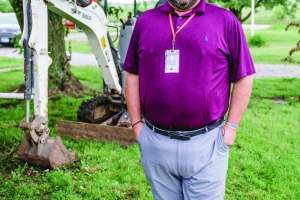



Name and title or job description: Collin Smith, co-owner
Business name and location: Smith Septic Inc., Rochester, Illinois
Services we offer: Septic and grease trap pumping, installation and repair of new septic systems for residential, commercial and agricultural clients. Real estate inspections.
Age: 33
Years in the industry: My entire life, third generation. Full time for the last 10 years.
Association involvement: Director of Region 4 of the Onsite Wastewater Professionals of Illinois, since 2023.
Benefits of belonging to the association: As an active member in the organization, I get first-hand information when new state policies come out. OWPI is starting to collaborate with similar organizations to share a lobbying representative who will represent our interests in the state legislature. I also like belonging to OWPI to hear industry updates and associate with others in the industry. Although some consider association members as competitors, I’ve learned from fellow leaders in my local area that it’s best to focus on collaboration and opportunities and to learn from each other, rather than compete. If I have a question, I know I can ask people in OWPI for assistance.
Our crew includes: Mark Smith is my father and owner who now handles the majority of our office work, but he is always willing to hop in the pump truck when needed. Steve Maxvill is a full-time operator, capable of running the vacuum equipment, servicing aerobic units, running our new John Deere 60P excavator and doing other tasks.
Typical day on the job: I set my schedule based on the number of new installations I have lined up and how urgently they need to be completed. I typically schedule pumping jobs for Monday and Friday and installation or repair jobs for Tuesday through Thursday to maximize time spent at one location.
The job I’ll never forget: I was performing a septic installation on a large home and the buyer wanted to witness the septic inspection. When we showed up in just a service van, he was flabbergasted. He couldn’t imagine we would be able to locate or inspect the system without an excavator. Before he could start his next sentence, you could hear the “Ping!” of Steve’s probing rod bouncing off the inlet lid of the tank.
Another job that I remember is going with my grandpa, Gene Smith, to pump a septic tank at a dairy farm. We have a photo of me and Grandpa from that day. He started the company in 1963 and passed away about 13 years ago, and I remember going through the barns with him to see the cows and calves. I’m glad he started our family business, although I wish he would’ve been able to see the things we do now with installation and repairs, not just pumping.
My favorite piece of equipment: A probing rod and good quality Pony-style shovel are my favorites, and our new John Deere 60P excavator. It’s larger than our previous machine and saves a lot of time when excavating for a septic tank installation. We purchased the excavator from Martin Equipment in Springfield, Illinois.
Most challenging site I’ve worked on: About five years ago, I was hired to install a septic system on the property of a multimillion-dollar mansion on the shores of Lake Springfield. The soil was unsuitable for a conventional septic system, and the homeowner didn’t want a 6-foot mound system and drainfield filling up the backyard. They wanted green space and a waterfront view. They also wanted their home usable prior to the availability of municipal sewer.
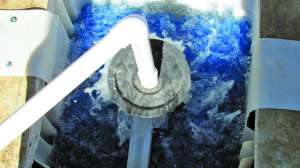
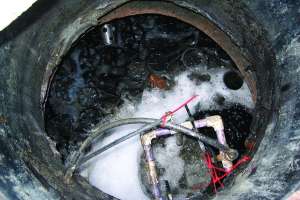
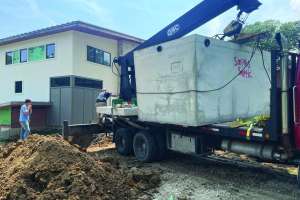
With those goals in mind, we installed a BioMicrobics NSF350 Membrane Bioreactor BioBarrier system in the front yard. It utilized a dual compartment Grove Precast trash tank/treatment tank and 10-by-10-foot rock and pipe subsurface drainfield, which is 1/20 the size of a field required for a standard septic system on this site.
The BioBarrier allowed us to place the unit and drainfield closer to the homeowners’ geothermal wells, due to the NSF350 rating. The unit has been working great, requiring only standard service checks.
No other contractor in the area provided the BioMicrobics BioBarrier option for the client, and they were so happy with the outcome. The discharge from the system can even be reclaimed and used for yard irrigation or toilet flushing duties, if desired.
The craziest question or most insightful comment from a customer: I remember one customer who built his own home and installed his own septic system. He used a bulldozer to level the soil over the system and broke the lid of his new septic tank. Rocks fell into the tank, and he asked me if the rocks would float into the drainfield. Of course, the rocks were too heavy to float anywhere. It was an odd situation.
If I could change one industry regulation, it would be: Illinois only has two licenses for septic contractors, pumping and installing. OWPI members have talked about developing an intermediate license for individuals who do service work. With a service work license, an employee could perform basic duties that now require an installer’s license.
Best piece of small business advice I’ve heard or came up with: If you don’t have the employees available to provide a service, then don’t offer it. Don’t bite off more than you can chew.
If I wasn’t working in the wastewater industry, I would like to: Fly airplanes or spend my days operating heavy equipment.
Crystal ball time – This is my outlook for the wastewater industry: I see the industry shifting to more advanced systems such as MBR, SBR and other ATU variants to help reclaim and reuse our wastewater, rather than just simply disregarding where wastewater goes or whom it affects.
Continue reading for free