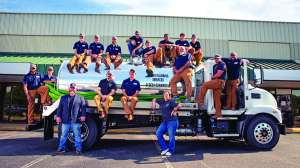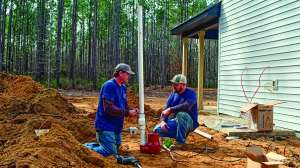

Septic Works of the Lowcountry often deals with groundwater when installing septic systems in the sandy soil of coastal Georgia near Savannah.
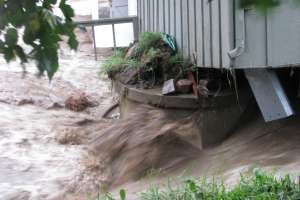
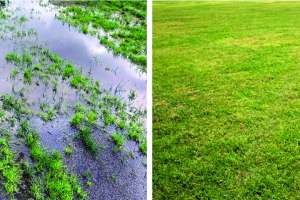
“Everywhere we work, in this whole floodplain area, I’d say up to 75 miles inland, we have to deal with high water tables,” says Frank Schmitz, who owns the company with his wife, Cameron. “We have to install a lot of mound systems.”
And because suitable rock for conventional systems is usually too expensive to ship to job sites, Schmitz and team members rely on alternative media. They favor Septic Stack pipe systems from ADS.
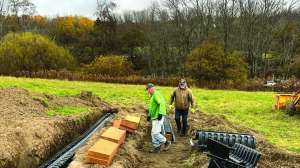
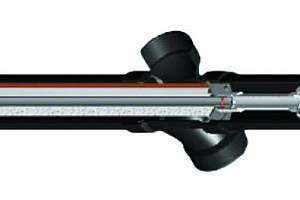
Septic Stack media consists of bundles of plastic pipe banded together. The pipe is engineered with holes and slots, allowing it to collect and disperse effluent as it passes over the pipe corrugations. In essence, it functions as a trickle filter. Systems are available in multiple sizes for use in both residential and commercial applications.
The bundles of 4-inch HDPE pipe resist corrosion and abrasion, and light weight makes them easy to carry even into confined sites or locations far from the offloading point. Ten-foot lengths help speed up installations while allowing substantial design flexibility, according to the manufacturer.
Applications include trench systems, mounds, beds, pressure distribution systems, and low-pressure piping. The pipes are structurally strong enough to support an H-10 load rating with 12-inch settled cover. A bundle height of 8.6 inches provides a low profile. Bundles in place run the entire length of the system and provide high storage volume.
Pipes come in bundles of nine, 11, or 13 and in widths from 23.5 to 33.5 inches. Storage capacities range from 8.9 to 12.8 gallons per foot, and filtration areas from 160 to 220 square inches per foot. The company advises users to contact their local health department or county sanitarian for information on which sizes meet state and local requirements.
Read more about Septic Works of the Lowcountry in the May issue of Onsite Installer.
Continue reading for free