

Soils not suited to treat wastewater are an unfortunate reality that installers see often enough. One option for treatment in these situations is an evapotranspiration pond or bed.
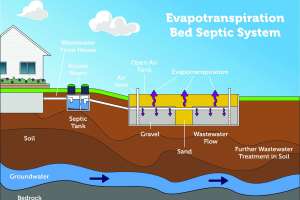
True to their name, this type of wastewater treatment system utilizes evapotranspiration, which is the process of water loss from the soil through evaporation and transpiration from the plants growing in the area.
Variations in design
ET ponds are lined with either synthetic or clay liners to prevent the percolation of wastewater into the groundwater. They are typically located in open areas exposed to wind and sunlight to facilitate the evaporation of the liquid. ET beds, on the other hand, may or may not be lined and are employed in situations where the soil is unable to effectively treat wastewater before it percolates into the groundwater, such as in rocky soils or where the soil hinders the percolation of wastewater from the soil adsorption area, as is the case with heavy clay soils.
In lined systems, the ET bed is lined with 20 mm plastic, natural clay, synthetic or concrete liner. A liner is required if the surrounding soil is very permeable, such as in sandy, gravelly or karst limestone soils. Unlined systems may be allowed to be used in highly impermeable soils such as heavy clays. In unlined systems, wastewater is disposed of by a combination of evaporation, transpiration and absorption, which may be referred to as an evapotranspiration/absorption system. In this case, the soil must have adequate capacity to allow the effluent to infiltrate.
How it works
In ET systems, treatment begins in the septic tank and then typically effluent is distributed via gravity into the pond or bed. Final treatment and dispersal occurs when the water evaporates and plants use the water and nutrients in the effluent and release moisture through transpiration through their leaves. As the water evaporates, salts, minerals and solids from the effluent accumulate. During very wet periods when evapotranspiration is low, ET systems store water until drier periods when evaporation and transpiration occur.
The setup
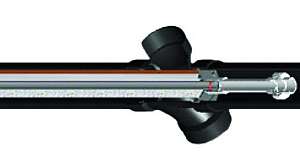
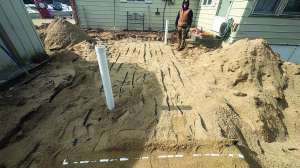
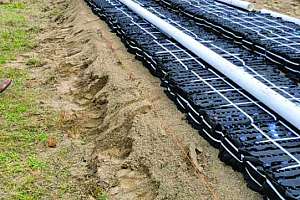
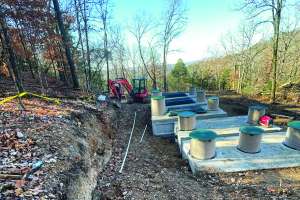
When constructing an ET bed, start by placing a liner and a sand cushion on the ground. Next, set up a storage system at the bottom of the bed. The storage system typically consists of a layer of rocks or gravel, with a uniform size ranging from 3/4 to 2 inches in diameter, filling the bed to a depth of 12 inches or less, depending on the overall depth of the bed. Distribution pipes are usually positioned 4 feet apart and at least 2 feet away from the bed walls, with their tops installed flush with the top of the rock media. Geotextile filter fabric is then placed over the rock to prevent soil material from migrating.
Following this, loamy soil is added to fill the bed within 2 inches of the top. Proper soil is crucial in an ET system as it helps draw water toward the surface. Wicks are also commonly installed in the bed. These are soil columns that extend through the rock media to the bottom of the bed, drawing water from the storage area into the surrounding soil and toward the surface area. The total wick area typically covers 10%-15% of the bed surface and is evenly distributed throughout the bed. After the loamy soil is in place, the final 2 inches are filled with sandy loam and mounded in the center with a 2%-4% slope toward the outside of the bed to shed rainwater and stormwater.
Good grasses
For optimal water transpiration, it is advisable to plant vegetation that has been specifically chosen for this purpose, such as Bermuda or St. Augustine grass. The most effective method for establishing grass may involve laying grass sod over the area. Using seeds could result in the mounded soil being washed away during heavy rainfall before the grass has had a chance to become established.
Additionally, larger plants with shallow root systems, such as evergreen bushes, bulrushes and reeds, can also assist in water absorption. When planting grass that has dormant periods, it is important to ensure that there is sufficient vegetation on the beds during these times. One common solution is to overseed with winter grasses to facilitate year-round transpiration.
Not for everyone
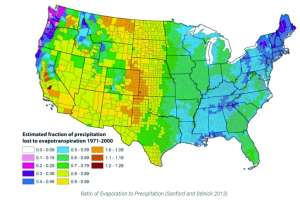
An important factor to keep in mind is that ET ponds and beds are influenced by climate and are not suitable for regions with higher rainfall than evapotranspiration. The map shows the portion of historical rainfall lost to evapotranspiration. Regions in red, orange and yellow on the map may be suitable based on the climate.
These systems are most effective in arid climates with low rainfall and high temperatures, such as the Southwestern United States. Conversely, they are not well-suited for areas with high humidity and heavy rainfall. In mountainous regions with fractured bedrock, where other dispersal options are not viable and may result in untreated wastewater discharge into groundwater, these systems may be appropriate.
ET systems are only effective in specific climate and site conditions. If regulations, climate and soil conditions are favorable, ET systems can be a viable solution for some customers.
Sizing
The size of single-family home ET and ETA beds typically ranges from 3,000 to over 10,000 square feet. To ensure effective pretreatment, it’s important to design processes that maintain the organic load at less than 200 mg/L BOD5 and less than 25 mg/L FOG. Calculating the area involves adjusting the BOD area loading rate for elevation as the evaporation rate decreases with increasing elevation.
The area required for evapotranspiration is determined by a water balance calculation that considers seasonal sewage flow, annual potential evapotranspiration rates and annual precipitation rates. In high desert climates, the potential evapotranspiration can differ significantly between summer and winter, often by a factor of four or more. Therefore, it’s recommended to use winter evapotranspiration rates for calculating the required area to ensure the ET system can handle the lowest evapotranspiration rates.
Passive ET systems require large land areas but no direct energy input, and they have low operation and maintenance requirements. Communities and residences in suitable climates with supportive regulations and ample open land can benefit from this technology. ET and ETA beds can be transformed into attractive green spaces, while ET ponds can serve as open-water features. However, without proper care, they may become overgrown with weeds or dead vegetation. It’s important to remove trees to prevent root-related dike failures and exclude burrowing animals for the same reason. Grazing animals can also be a concern due to the trails they leave, which may contribute to erosion.
Putting them together
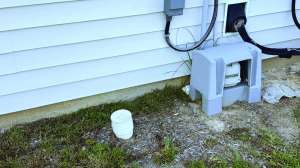
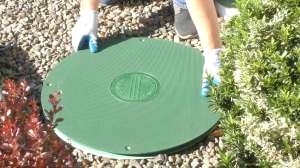
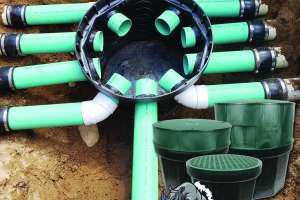
When using more than one ET bed, a valve connecting the two beds allows alternation of the wastewater flow between the beds. When one bed becomes saturated, turn the valve to divert effluent into the other underloaded bed. An inspection port added to each bed will help you determine water levels during use. Covering the port prevents insects, small animals and unauthorized people from getting to the bottom of the bed.
Things to consider
The challenges for ET systems include insufficient water, inadequate storage and excessive organic loading. Insufficient water during periods of high evapotranspiration can lead to vegetation die-off. To ensure long-term viability, a supplemental irrigation system must be integrated.
Additionally, inadequate storage can result in overflow during low ET periods and extended wastewater peak flows. Low ET occurs during cold and overcast seasons, while extended peak flows happen during high water usage periods such as holidays and large events, leading to overwhelming of the storage capacity and overflows.
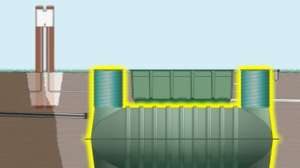
To address these challenges, installation of observation wells and storage tanks is recommended. Observation wells allow for monitoring of water depth in the storage portion of the ET bed, while storage tanks enable the capture of excess effluent for storage until suitable ET conditions or disposal by a pumper.
Excessive organic loading in BOD or FOG can lead to plugging, short circuiting and overflowing of the ET bed, potentially causing odor, pathogen and nuisance issues. Heavily loaded ET ponds may experience short-term odor episodes, particularly during windy or low-pressure weather conditions. Also, if the pond is covered in ice, odors may become noticeable following ice breakup.
Continue reading for free