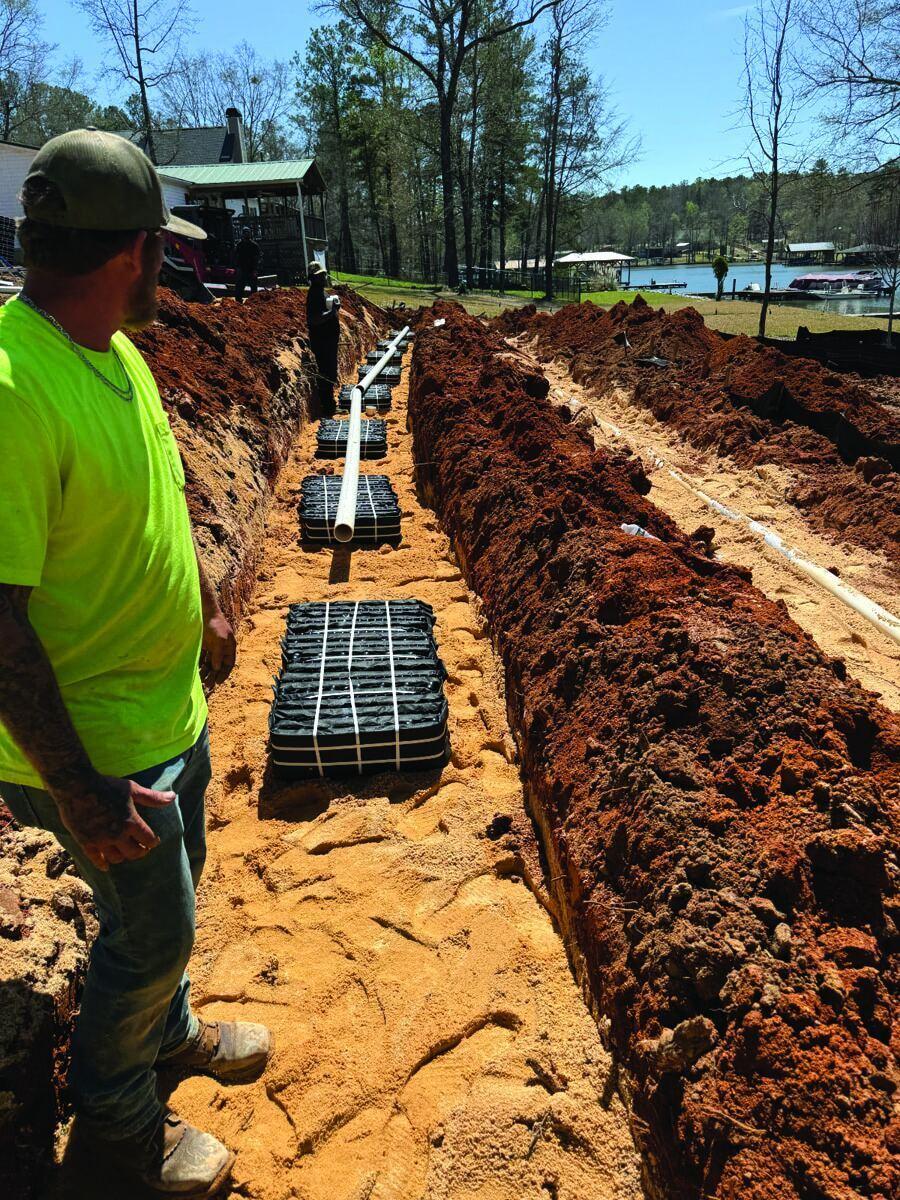
Filter units enable system on sloping terrain
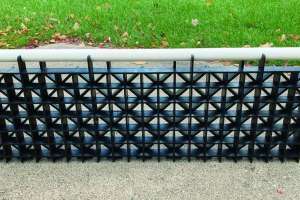
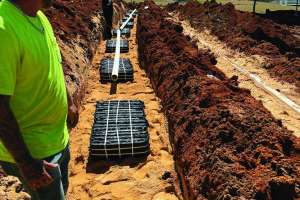
Problem: Developing a residential property in Sparta, Georgia, was complicated by its sloping terrain, a shallow water table and variable soil conditions. Meeting the local health department’s stringent requirements for primary and reserve drainfields appeared to preclude the construction of even a modest-sized residence.
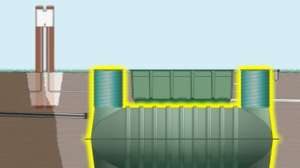
Solution: Southern Infrastructure & Construction actively assisted in finding solutions to the site’s complexities. By fostering strong communication and collaboration with the local health department and a qualified soil classifier, they were able to identify viable strategies for system design and sizing using Eljen Geotextile Sand Filter (GSF) units. Leveraging a more accurate soil classification and a cooperative relationship with the health department, the contractor successfully engineered a septic system with the necessary separation from limiting layers, effectively accommodating a three-bedroom home on the existing slope.
Result: This outcome alleviated the property owner’s initial concerns as the land was widely perceived as undevelopable. 800-444-1359; www.eljen.com
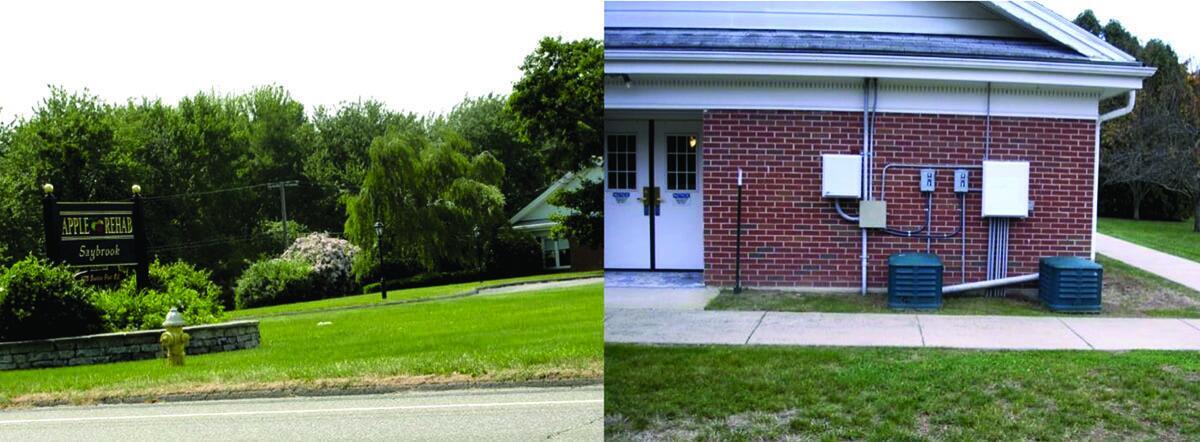
System increases oxygen levels to avoid effluent surfacing
Problem: A health care facility in Old Saybrook, Connecticut, had a long history of septic system performance issues. The system was repaired in 2003 with concrete chambers and began to experience problems within three years of operation, including effluent surfacing that forced the facility’s operators to pump the tank and chambers approximately three times per week.
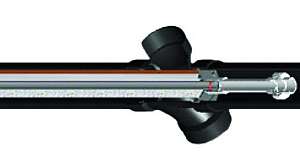
Solution: All potential solutions were considered, including system replacement and the addition of a tank-based aerobic treatment unit. The most cost-effective solution was to add Geomatrix’s SoilAir to the existing chambers. SoilAir increases oxygen levels to sufficiently aid in the effluent treatment process and is efficient to install and operate. In 2009, a SoilAir system was added to the existing chamber system to increase oxygen levels within the leachfield.
Result: Before the addition of SoilAir, 100% of the system was in use; after introducing air, use has fallen to 25%, and the system has not experienced any septic issues in the last decade. The system is monitored through a logic-based control system designed to react to issues before they become problems. Using SoilAir without excavation of the chambers allowed the owners to adopt a normal pumping schedule, removing the scum and sludge from the tank as needed. 860-510-0730; www.geomatrixsystems.com

System provides complete treatment including high-strength waste from RV park
Problem: A new owner of an RV Park in northeast Ohio was challenged with replacing the existing outdated, failing septic system. The park has a peak load of 258 seasonal campsites, 22 transient RV sites and 24 primitive sites. The high-strength blackwater waste was being serviced through an onsite dump station collection system. The showers, the manager’s home and the office were all being treated through the same system. The owner was also tasked with planning for new, centralized lavatories and showers for the RV park to be connected to the new wastewater treatment system.
Solution: The Potter’s Company designed a wastewater treatment system employing the IMET aerobic packed-bed media biological reactors for complete treatment to discharge into a drip distribution system for soil dispersal. The reactors are first used to treat the high-strength waste from the dump stations. Treated effluent from the dump stations is then mixed with the waste from the manager’s home, office, new lavatories and showers in a flow equalization system to manage peak loading. The reactors are then used to complete the treatment of the wastewater to levels below 30 mg/L for safe soil absorption.
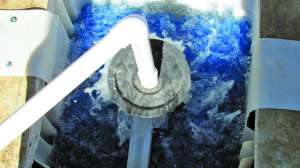
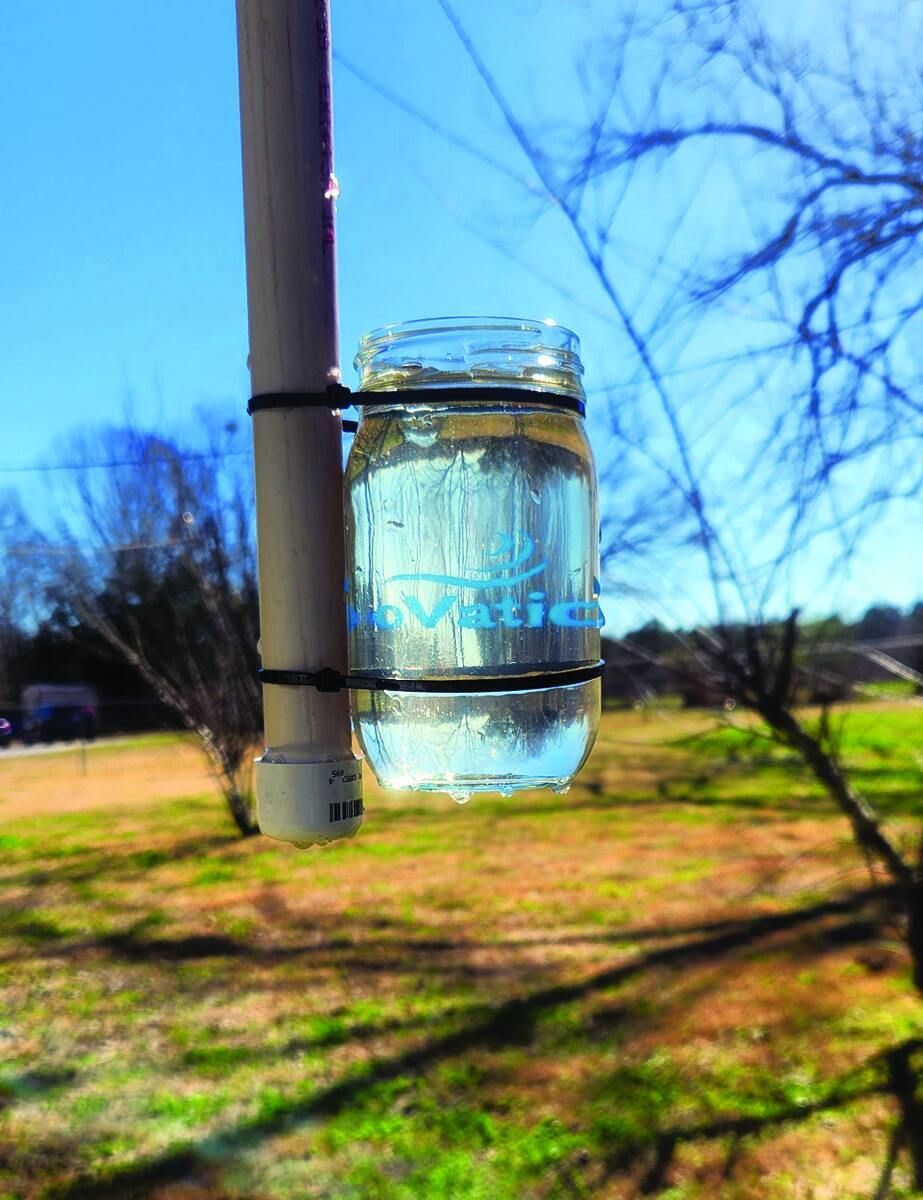
Result: The EPA permitted wastewater treatment system went into successful operation Feb. 6. The park is open to seasonal campers and fully operational. On a recent visit to the site, dip samples were taken through the treatment train, as seen in the inset images. 440-799-3135; www.imet.net

Luxury RV resort gets sewered
Problem: Angel of the Winds RV Resort in Arlington, Washington, a new luxury development minutes from the Angel of the Winds Casino, needed a wastewater treatment system designed and installed that could handle waste from a clubhouse, several restrooms, eight well-appointed yurts, and 180 fully equipped RV sites.
Solution: Engineers at SCJ Alliance and Rober “Bob” Nation of Fextex Systems in Yakima, Washington, designed a system that could handle 14,400 gpd average flow with a 28,800 gpd maximum and reduce BOD from 300 mg/L to a discharge level of 40 mg/L, TSS from 195 to 40 mg/L, and TKN from 195 to 20 mg/L. Sewer lines run from the RV sites, clubhouse and restrooms to a grinder lift station and two duplex STEP systems, 6,000- and 25,000-gallon tanks, for initial treatment. The sewage flows to a 25,000-gallon primary tank, passes through effluent filtration, and goes to a 25,000-gallon anoxic tank. Then, the effluent goes through a series of 20,000-gallon aeration tanks and to secondary treatment through six Orenco AdvanTex AX-Max units. The effluent travels to an MBBR tank for refinement, and through an AX-Max unit for third-stage polishing. The treated, clarified effluent is discharged in the drainfield.
Result: Overall, Nation says the project was a huge success for everyone involved, including contractor Reece Construction. Plus, everyone collaborated to create the best product possible. “I enjoy working with the engineers and contractors, working through the process,” Nation says. “We all take pride in what we do.” 800-348-9843; www.orenco.com
System helps rejuvenate failing drainfields in clay-rich soil
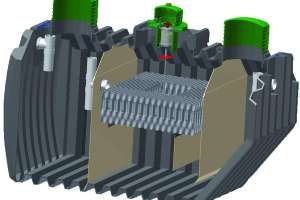
Problem: Alabama’s Black Belt region has dark, clay-rich soils that are unsuitable for conventional septic systems and drainfields. While some older systems operate for a time, they often fail prematurely due to soil limitations and biomat buildup. New installations typically require engineered mound systems, which can cost tens of thousands of dollars — far beyond the reach of many homeowners. A home in Montgomery County on the border of Lowndes County, Alabama, had a single-compartment 1,000-gallon tank that was backing up and overflowing.
Solution: Brown Excavation offered two options: a $25,000 engineered mound system or the RioVation BioMaze BM2624 system for a fraction of the cost. The BioMaze system offers a cost-effective alternative by transforming an existing septic tank into a Suspended Biofilm Generator — without modifying the tank or permitted system. The technology uses fixed-film media pods for attached growth and ceramic stone diffusers to support the growth of beneficial aerobic microorganisms. These microbes attach to the media as biofilm while some remain suspended in microscopic format within the tank. As the treated effluent flows to the impaired drainfield, the suspended microbes feed on the biomat, restoring permeability and functionality.
Result: Within two weeks, the drainfield was functioning again — demonstrating how the BioMaze provides a practical, affordable solution for failing septic systems even in challenging soil conditions. 352-228-4488; www.riovation.com
Continue reading for free