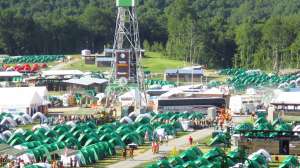

Located in Rockbridge, Ohio, Conkle’s Hollow State Nature Preserve encompasses a deep, narrow gorge in the state’s Hocking Hills region.
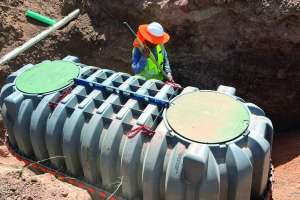
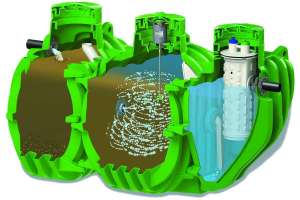
Of course, natural wonders need restrooms when they bring visitors from across the country like Conkle’s Hollow. Cody Wheeler Excavating of Winchester, Ohio, was hired to install a 3,000 gpd drip distribution system for a planned restroom at the preserve. The system consists of two 2,500-gallon septic tanks, a BioMicrobics Fast Unit, two 3,000-gallon dose tanks and a plowed-in StreamKey drip irrigation system to filter the wastewater into the soil.
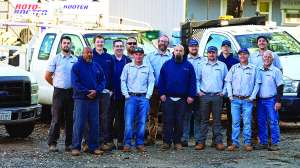
Cody Wheeler is a second-generation septic system installer. “My father and two of my uncles installed septic systems and another uncle owned a concrete precast company,” he says. “So, it was my destiny to end up in the septic industry. Since the age of about 10 years old, I remember helping my dad install throughout the summer months when I wasn’t in school. When I was 18, my father bought out my uncle’s precast company and I helped out with that for about six years. In 2016, I started my journey installing residential septic systems on my own.”
In 2020, Cody and his brother Jared (also an installer) joined forces with plans to install more challenging commercial septic systems. Their first such job was a 4,000 gpd drip system for the Army Corps of Engineers. “After a very successful installation we were hooked, so my brother and I decided to team up and install together moving forward,” says Wheeler. “Throughout the next couple of years, we installed just about every type of septic system throughout the entire state of Ohio for the ODNR, the Army Corps of Engineers and campgrounds.”
System components
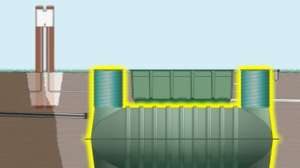
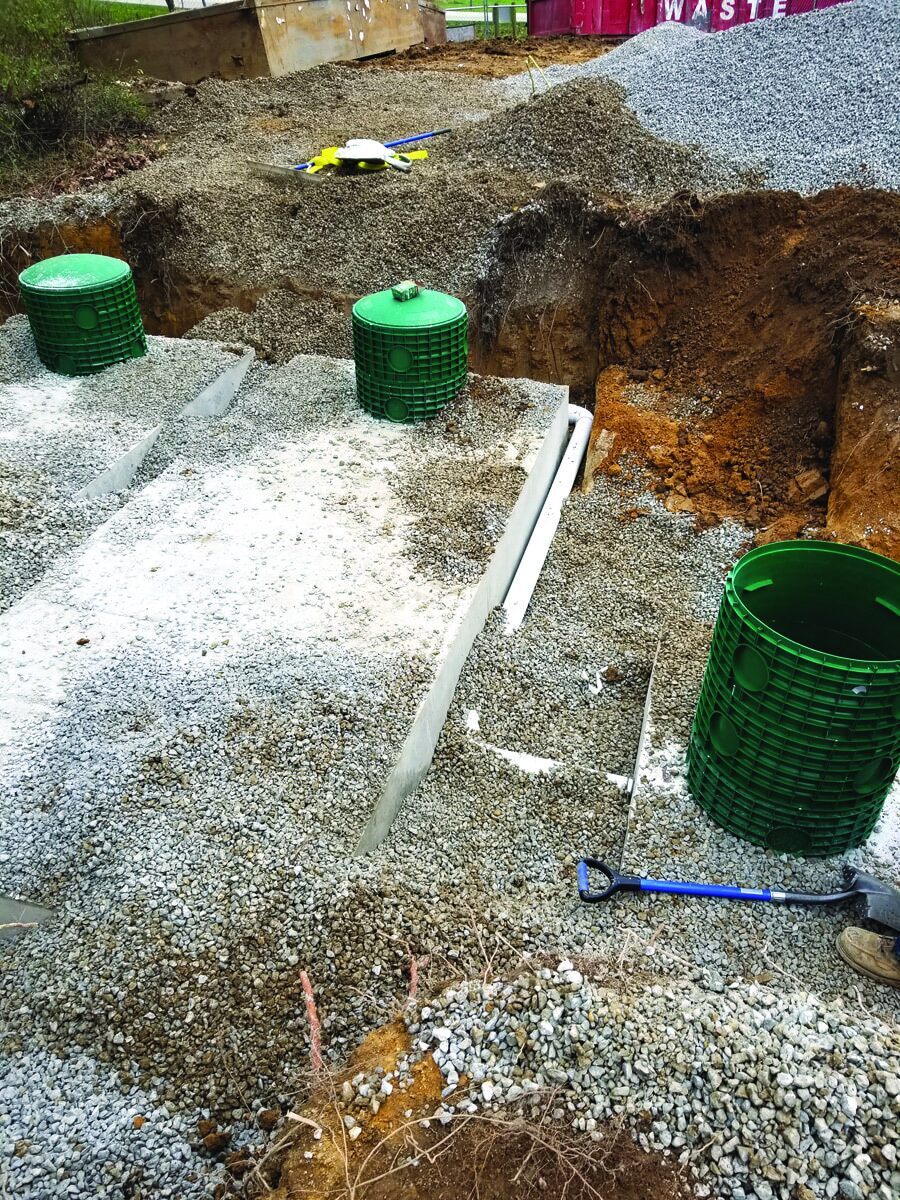
The Conkle’s Hollow restroom septic system is designed to store septic waste while shedding up to 3,000 gallons per day to the soil via drip irrigation. Major components include:
- Two Wheeler precast concrete 2,500-gallon septic tanks
- A 3,500-gallon pretreatment tank
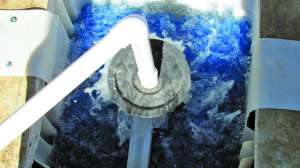
- A BioMicrobics Fixed Activated Sludge Treatment wastewater treatment unit
- Two 2,500-gallon dose tanks
- Two pumps
- A hydraulic unit
- Blower motors
- StreamKey wastewater drip irrigation system
- 1,800 feet of plowed-in dripline
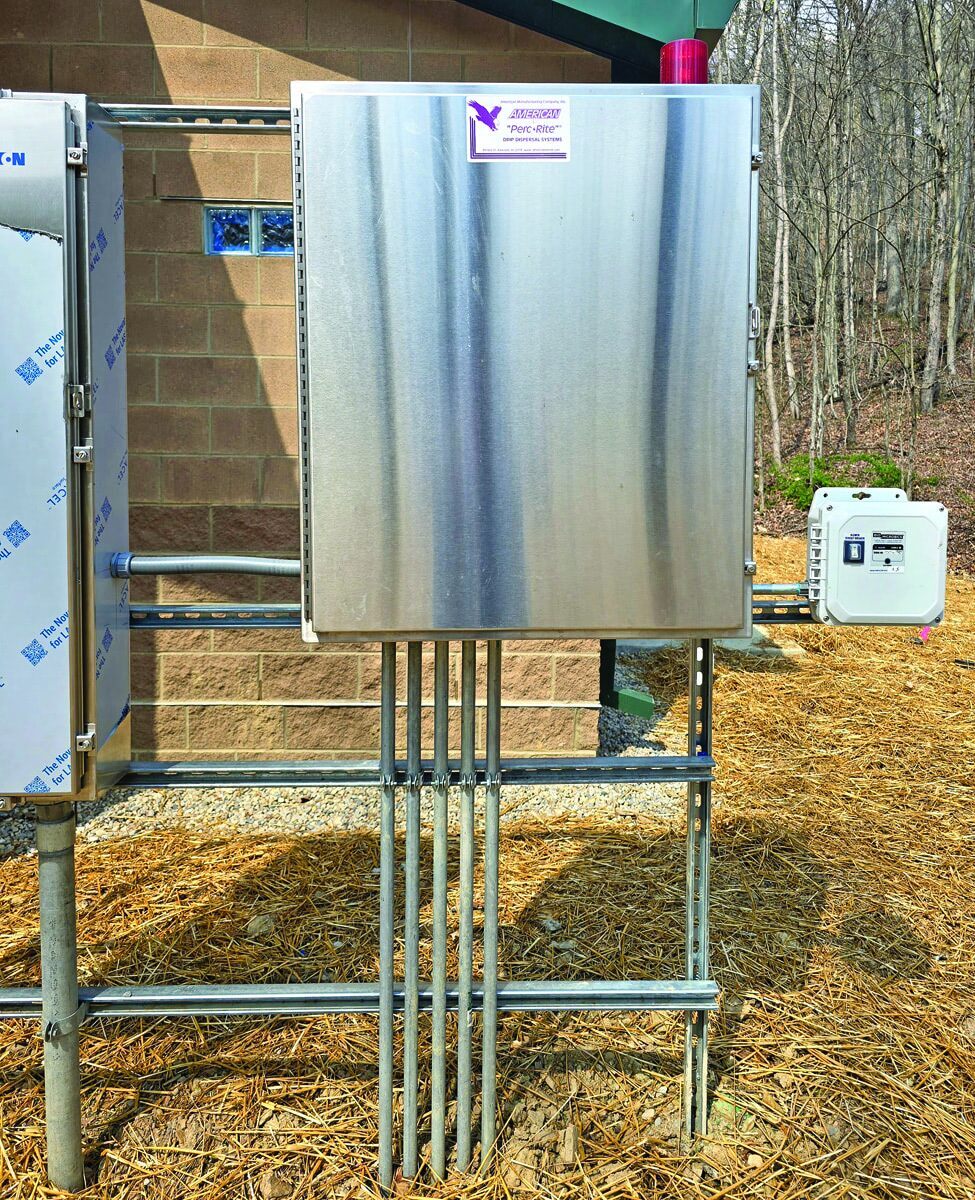
- Electrical panels
“The biggest challenge for a system this size was wiring up the panels and plumbing the dose tanks,” Wheeler says. “There’s so much more to it than your typical residential lift station.”
Site challenges
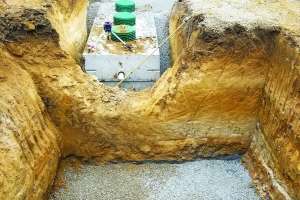
The terrain at Conkle’s Hollow was difficult to work with. The Wheeler concrete septic tanks (made by Cody’s father’s company) were 9 feet tall and had to be buried four feet deep. At the depth of 3 1/2 feet, the crew hit bedrock. “Still we were close enough to where we had to be that we were able to scratch our way down without having to bring in a jackhammer,” Wheeler says.
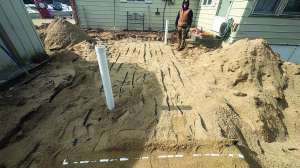
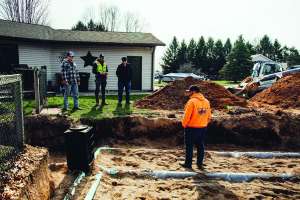
Installing the 1,800-foot StreamKey drip irrigation system also had its challenges. To get the line 12 inches into the ground, Wheeler and his crew had to use a vibratory plow. “There was partial woods in the area where the drip tubing had to go, so we had to fight our way through vegetation and tree roots.”
System operation
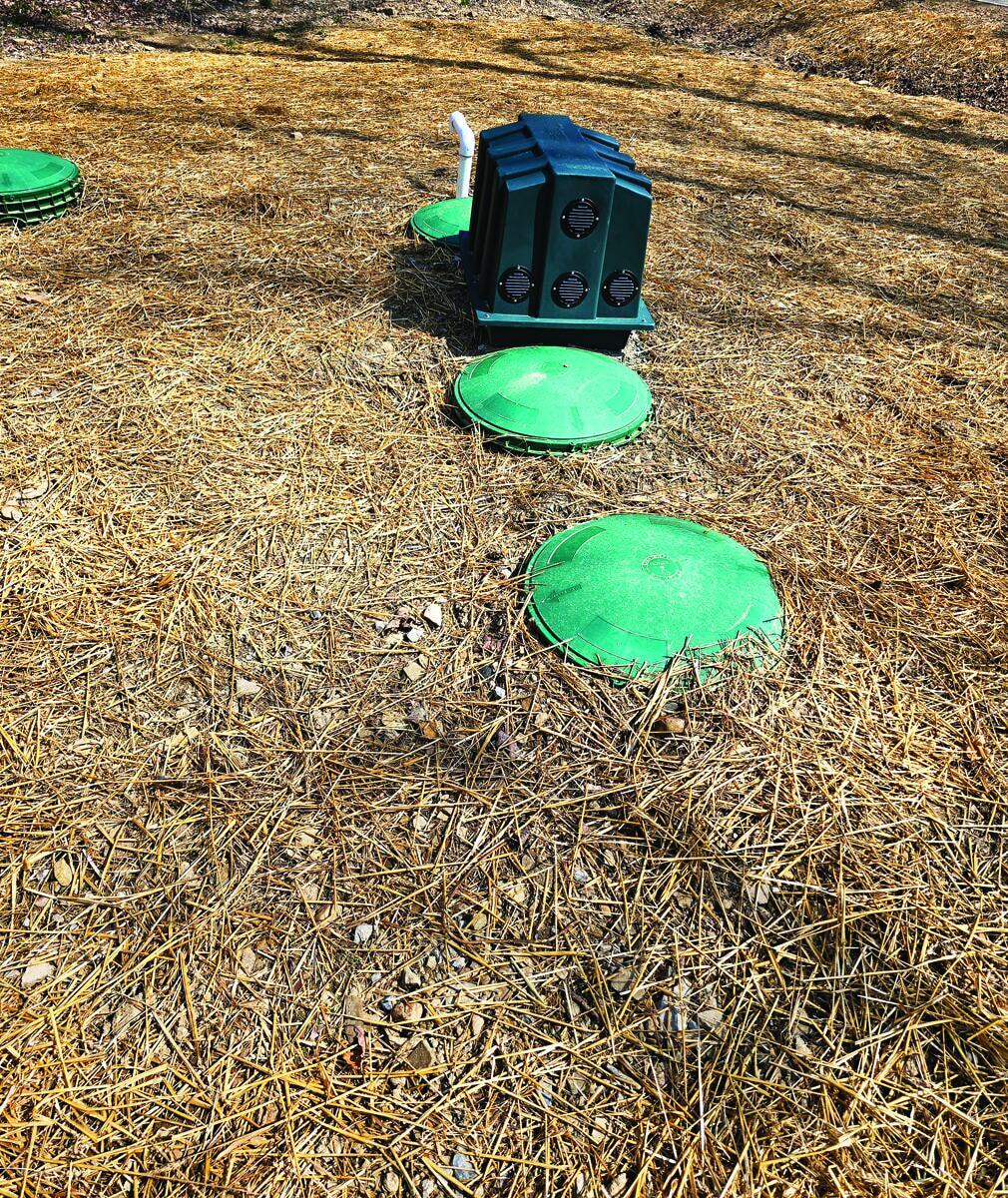
The sanitary line from the new Conkle’s Hollow restrooms runs directly to the two 2,500-gallon septic tanks plumbed in series. “It goes in the top of one, which is bottom connected to the second tank,” says Wheeler. “That is where the solids stay, in those two septic tanks.”
The liquids separated from the solids then flow from the second septic tank into the BioMicrobics FAST wastewater treatment unit. From there, treated fluids flow into the two 2,500-gallon dose tanks.
“These are pressurized by the hydraulic unit, for feeding into the StreamKey drip irrigation system,” says Wheeler. “The fluids go through the tubing in a circular pattern back to the hydraulic unit. Some of them are drained into the earth, while the rest of the fluids return to keep the flow going and prevent freezing.”

Installation
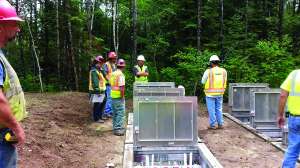
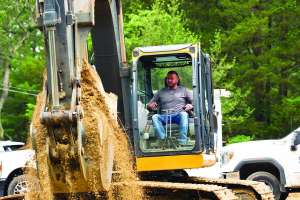
Installing the Conkle’s Hollow septic tank system took about two weeks. The tanks had to be lowered into place using boom trucks, after their sites had been excavated and flattened using a 50,000-pound ground pounder.
Another month of time was required to dig the droplines a foot underground due to the tree roots and vegetation. “The biggest challenge was the tree roots, because when you came to one, you had to hand-dig around the upper side of the tree to elevate it,” Wheeler says. “If you go in on the lower side, the pipes will freeze because they’re only 12 inches deep.”
All told, it was a lot of work to install the Conkle’s Hollow septic system, but the results were well worth it. “Everything went great and it was good to work for the ODNR,” says Wheeler. “It was a tough job for sure, but that’s the kind of work we like to do.”
Continue reading for free