
Sunnyside Family Retreat is a seasonal trailer campground located in Westport, Ontario, about 75 miles southwest of Ottawa. Established in 1992, the campground provides lots for 160 trailers whose residents enjoy a lakefront beach and other amenities.
All septic systems in Ontario with a design capacity of greater than 10,000 liters (approximately 2,642 gallons) per day specify special engineering and approval by the Ontario Ministry of the Environment, Conservation and Parks, requiring the campground to upgrade the existing septic system serving the campers.
Designing a new system
Campground owners Melanie and Kevin Scott engaged engineers Kollaard Associates of Kemptville, Ontario, to provide a new design for the campground’s septic system.
“We previously had three septic systems and pumped out the individual trailers,” says Kevin Scott. “We took the wastewater to a dump station on one of the septic systems for treatment. The engineers determined that we could keep two septic systems in operation and build a new third system to serve the trailers and one comfort station. We would hook up the trailers in stages over a few seasons.”
The new system is designed for a capacity of approximately 12,000 gpd to be treated by a system from Waterloo Biofilter.

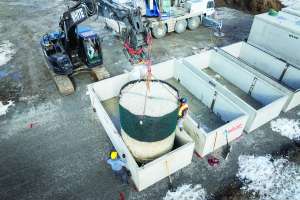
New lines are clamped to each trailer to convey septage and graywater through 3-inch PVC pipe. That wastewater reaches one of six lift stations and is then combined into one mainline as it’s pumped uphill to a series of 11 concrete treatment tanks and associated pumps, all supplied by Boyd Bros Concrete of Osgoode, Ontario.
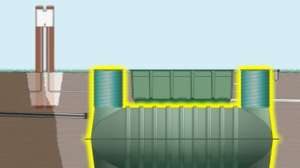
The first tank — the “trash tank” — has a capacity of 3,600 gallons and receives all of the wastewater pumped from the trailers. The waste then flows by gravity through four anaerobic digester tanks, each with a capacity of 11,900 gallons. From there, the wastewater is pumped from a 11,900-gallon dosing tank to five 9,000-gallon Waterloo Biofilter basket tanks containing filter foam that treats the effluent. Pumps in the last basket tank send a percentage of the waste to the first anaerobic digester tank, and a percentage to the pump tank, which pumps effluent into the drainfield.
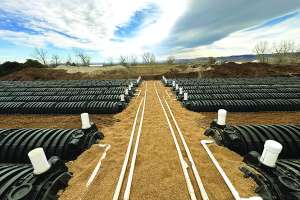
A header at the final pump tank distributes treated effluent evenly to each of three cells of two zones in the 21,500-square-foot drainfield.
The six to seven thousand tons of drainfield sand is specified as “less than five” spec sand (less than 5% of the silt cannot pass through a 200 millimeter sieve), supplied by Tackaberry Construction of Athens, Ontario.
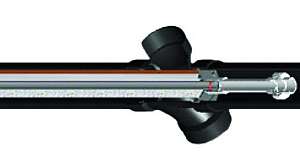
The drainfield features 1,200 feet of 1 1/4-inch pipe with 3,300 1/8-inch holes drilled into them. Effluent pipes are capped by 750 Infiltrator EQ24LP low-profile leachfield chambers.
The “less than five” spec sand is also used to top the leachfield chambers, capped by geotextile fabric and topsoil.
Waterloo Biofilter supplied all the control panels and the electrical system.

The contractor
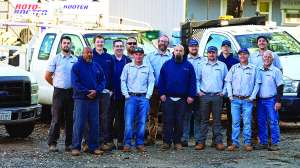
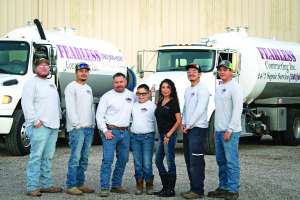
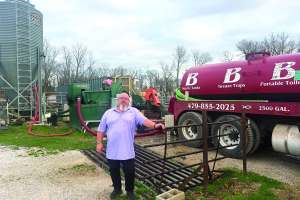
Ken White Construction is a multigeneration contracting company launched in 1968 by Ken White with a single track loader. The company now specializes in septic systems and commercial and residential site preparations, employing a staff of about 25. Ken’s son, David, became owner and president of the business in 2000. David’s son, Taylor, signed on in 2018 and is now the company director, with a focus on growing the company through marketing and social media promotion.
“By sheer scale and flow, the number of tanks and the extent of the disposal bed, this is the largest septic project we’ve ever worked on,” says Taylor White. “When we met owners Kevin and Melanie, we hit it off and connected on a family level. We also felt we were the right fit. A lot of companies do septics, but not everyone can handle a job of this size, and has a large enough team with the knowledge to install it properly.”
Ready to roll
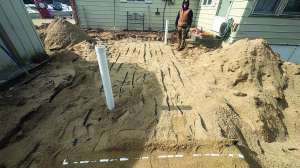
Work began in December 2024, with the excavation of the septic beds, which required removing 3 1/2 feet of cover down to bedrock with topsoil boxed in for later reuse. The contractor used a mix of excavators and dozers to complete the work.
Kollaard Associates inspected the sand at the source prior to delivery. “To meet that spec, Tackaberry had to take their regular ‘beach sand’ and rewash and screen it,” White says. “Cold temperatures really fought us. We had to flatten out each load of sand at the end of the day because by morning time, it would be rock hard in the shape you left it.”

The sand and gravel were installed before Christmas break, and Kollaard then conducted a subgrade inspection. Returning in January, the contractor laid down the PVC pipes. Workers formed an assembly line, drilling holes and then handing the correct sections along to allow for perfect hole spacing.
The system then required a “squirt” test by the Kollaard engineers, just as the temperature plummeted below negative 10 degrees F. Under the squirt test, the system must be pressurized, and water must squirt 18 inches into the air through the holes in the pipe.
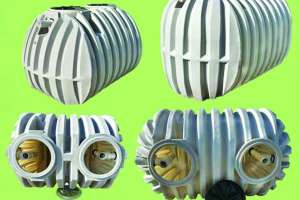
“We couldn’t fill the concrete tanks because they would freeze by the next day, so we built a homemade system to pressurize it,” White says. “We took a new IM-1060 Infiltrator plastic septic tank, filled it with water from the campground and dropped in a pump that would match the pump that’s going to be used in the system. There was actually a day when the lines froze. We had to wait for it to warm up and complete the second half of the inspection the next day.”
Next, the crew installed the 750 Infiltrator chambers, topped by
filter cloth and backfilled additional sand and topsoil.
Time for the tanks
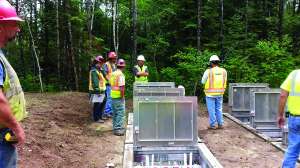
The crew next turned to the installation of the 11 concrete tanks on the hillside above the drainfield on a six-week schedule. Excavation again reached bedrock, so instead of blasting, the contractor proposed the cheaper alternative of backfilling additional sand and allowing the tanks to rise above ground level. A 200-ton crane was used to position the tanks.
Once in place, techs from Waterloo Biofilter arrived to assist with placing the foam baskets and specialized piping. Following basket placement, butyl and water sealants were used to seal the lids to the tanks.

“The weather was so cold, the guys kept the gaskets in the trucks with the heat on, so that they weren’t rock hard when we installed them,” White says.
Hooking up trailers
The trailers were slated for hookup in groups of 20 to 30, with work beginning on the first phase of hookups in fall 2025 after the tourist season ended.
“Each of them is plumbed from scratch,” White says. “We sent three guys in with a 5-ton mini-excavator, which was small enough to get between the trailers and dig trenches and place gravel and sand.”
Maintaining cash flow
White emphasizes the importance of maintaining cash flow across the full extent of a large, multiyear project such as this one.
“There’s more than half a million dollars’ worth of parts in this installation that you have to pay for before you put them in the ground,” he says. “You have to maintain your cash flow to keep the project going. Sunnyside was always good with us, paying for products as we brought them in. That financial partnership is essential to a successful long-term project.”
Moving to the finish line
With the tanks and drainfield complete, Ken White Construction is waiting for the end of the summer 2026 camping season to return for the final trailer hookups.
“Last fall, we excavated the tight spaces between the trailers,” White says. “But we discovered that there were no site plans to guide the hook-up of 45 trailers at different elevations that have been there for 30 years. There are wires, waterlines and cables in the ground, and you have to negotiate your way around them. We had a debrief and discussed what we did well and how we can make the process more efficient so we can bang it all out quickly when we come back this fall.”
Continue reading for free