
A common question we are asked by homeowners seeking a second opinion is, “My installer wants to use a plastic septic tank in my system. Is it a viable option?”
There are a lot of variables here and many things to consider to get to the right answer. Is there a right answer? Not all tanks are created equal; they each have positives and challenges.
There seems to be a lot of applications for each type of tank.
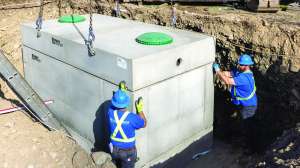
Concrete tanks: The old stalwart
Concrete tanks have been used for a long time with very good results.
The advantages include:
- Very durable and lasts a long time
- Can be buried deep
- Can be manufactured to be traffic-rated
- Easy to install as long as you have the space to get a boom truck in, or you work with very large machines that can lift them
- Maintains its shape
- Most remain watertight and structurally sound for a long time
Drawbacks include:
- Very heavy
- Need a lot of room for the boom truck (or large machine to carry them)
- Microbial concrete corrosion in a small percentage of instances
Concrete tanks have been used the longest with incredibly good results. The manufacturers make every size imaginable and stay at the forefront of what we need for multiple chambers, etc. The National Precast Concrete Association does an amazing job of staying ahead of the curve on septic tank design and manufacture; they always seem to be innovating. The fact that they are heavy isn’t a negative — it’s one of the variables that make them so strong and durable. Concrete tanks have shown their long-term durability.
The challenges with concrete tanks are the fact that you really need a large area that allows good access for a huge boom truck to get in and close to the excavation. Some tight, small, wooded and/or steep sites are challenges for getting boom trucks or larger equipment in.
Microbial concrete corrosion has been an issue affecting a small percentage of concrete tanks. But what we’ve learned about the concrete corrosion issue shows that it can be virtually eliminated with proper mix of the concrete up-front. That seems to match with my anecdotal observations in my local area.
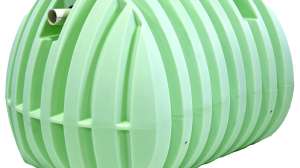
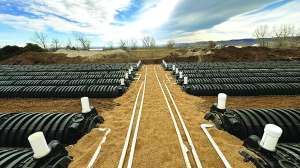
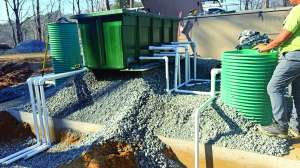
‘Plastic’ tanks
The benefits of plastic tanks include:
- Very light, can be easily transported into sites that heavier tanks cannot be
- Should not degrade over a very long period of time
- Most likely should be able to serve areas not served by concrete tank manufacturers
Challenges of plastic tanks:
- Depth of bury for some remain shallow (not that shallow tanks are a bad thing)
- Requires more care during installation
- Some will not meet traffic rated standards
- Some brands have limited sizes, specializing in residential sizes only
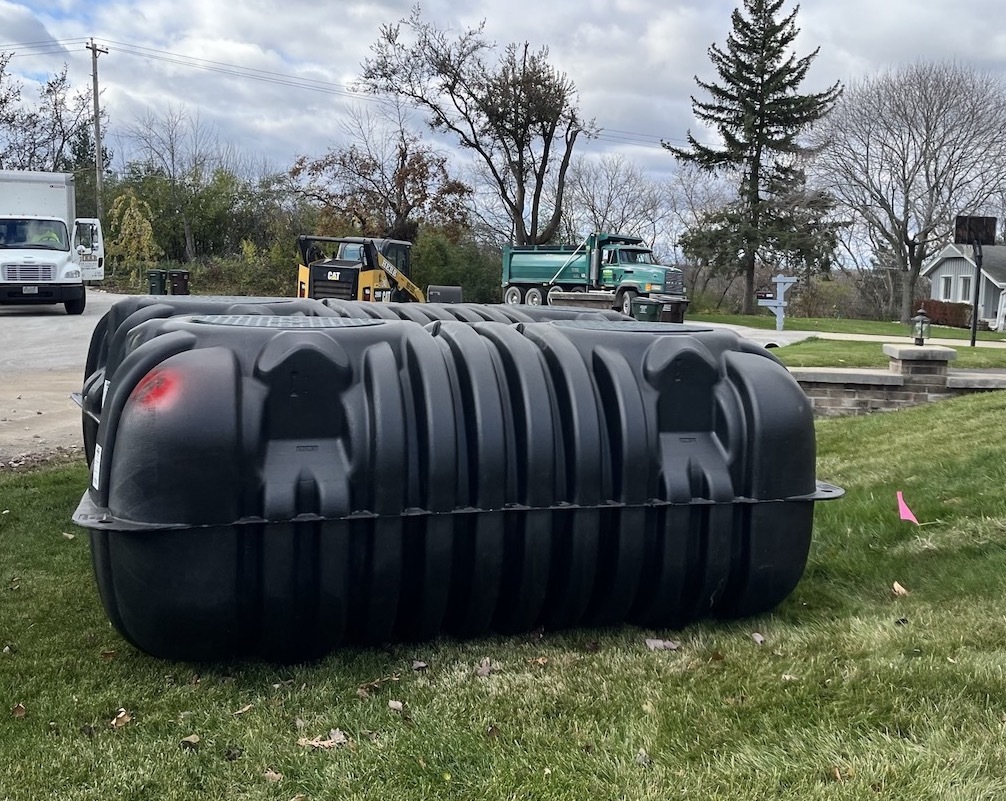
“Plastic” tanks that I am aware of come in all different types of material — polyethylene and polypropylene are two of the types that first come to mind.
Decades ago, when brands sold plastic tanks directly to end consumers in big box retailers, there were problems with the watertightness of those tanks. Also the early tanks came with fine print — warning not to pump the tanks as the water was part of their structural integrity.
Plastic tanks have come a long way. They come in all different designs. Some are relatively thinner material and have a middle joint. Some are quite thick material, molded as one piece with no joints. The owner of the company I work for has had two plastic tanks in use at his home for over 20 years and has never had any issues.
The one thing I will say about plastic tanks is with some models you must be very careful during installation and backfill. Overexuberance on the backfill could slightly deform the tank, which can make the risers and the cover not fit right — causing either odor or watertightness issues. If tanks are installed and backfilled following manufacturer instructions, there typically are not any issues.
Being a company that installs a lot of larger tanks, we still use a majority of concrete tanks. However, our percentage of plastic tanks continues to grow each year as we find more and more sites that we are just not going to get a large boom truck into and need lighter tanks as an option.
Both tanks have their place. As an "old timer," I really like concrete when I can. But the fast way the plastic tank industry has really improved their products over the years, they have a significant part to play in the onsite industry.
Both are a viable option. Each job has different variables where one type of tank makes more sense than the other. It is a great thing that technology keeps allowing onsite installers more options to choose from.
Please note that this article does not intend to list every single one of the virtues and challenges of each type of tank; you may have other reasons for choosing one over the other in different applications.
About the author
Todd Stair is vice president of Herr Construction, Inc., with 34 years’ experience designing, installing, repairing, replacing and evaluating septic and mound systems in southeast Wisconsin. He is the author of The Book on Septics and Mounds and a former president of the Wisconsin Onsite Water Recycling Association.
Continue reading for free