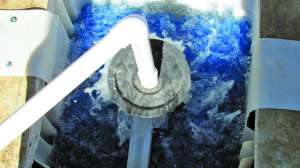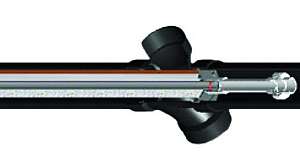
Effluent filters in the outlets of septic tanks keep particles larger than the filter’s slot, hole or opening from reaching the drainfield. These filters are designed for residential and commercial use, gravity flow applications and pressurized systems. But screening of large solids is just one of their jobs.
Data from informal and unpublished studies yields many important clues about filters, heightening confidence in their use. For example, if the septic tank precedes a dosing tank containing a centrifugal effluent pump, an effluent filter can retain solids such as feminine hygiene products.
An effluent pump will pass these solids through the pump housing, but usually not through the impeller, and that creates the need for a service call. Evidence proves that effluent filters prevent these and other large solids from affecting distribution boxes and any downstream components.
Effluent filters also may contribute to BOD and TSS reduction in septic tanks, although no sound published data confirms this belief. Besides their screening and potential treatment benefits, filters warn homeowners of septic tank problems (often associated with waste streams), and promote maintenance to help avoid expensive system replacements.
Kill the messenger
The idea of effluent filters acting as sentinels is not new. However, they communicate the warning by clogging frequently, causing some people to surmise — incorrectly — that the filter is the problem, and throw it away.
The fact is that waste stream quality and quantity can affect treatment and system longevity. A filter that clogs often is likely telling the owner and maintenance provider that something is amiss, and they should figure out what factor or combination of factors is causing the problem. Listening to the filter’s warning and being skilled enough to understand the nature of the problem will conserve homeowners’ money and ultimately the value of the property.
The industry believes effluent filters promote system maintenance, resulting in a higher probability of treatment success for the life of the system. Most owners, unwilling to spend the money, do not share this belief. They don’t understand that maintenance visits cost far less than replacing the system. But another benefit of effluent filters is that they remind owners about maintenance because the access point to them is visible.
Manufacturers generally recommend cleaning effluent filters annually, but the frequency varies depending on load. For example, a system serving a home with four teenagers likely will require more frequent cleaning than a home with a pair of empty nesters. When maintenance is required, qualified professionals can clean or replace the filter and inspect the other components in the system.
Maintenance providers should leave a maintenance report at the residence. A complete record of those visits has great value when the property is sold. The onsite system is no longer a black box of potential liability because the owner has a description of its fitness.
Today, high fuel costs and long commutes often make rural property less attractive and perhaps less valuable than a comparable home in the city or suburbs. An onsite system with an unknown service history can contribute to a buyer’s angst, but one with maintenance records isn’t scary anymore.
Toward guidelines
Industry professionals need to work together to promote effluent filters and onsite system maintenance to regulators and homeowners. Creating a generic guideline would be a good start. It could list the benefits of filters, give basic maintenance instructions, and state that filters need cleaning once or twice a year.
The industry needs to push the filter, access and maintenance theme hard by educating homeowners, regulators and installers. Doing so will create a fresh economic opportunity for onsite professionals.
To grow, the industry needs to promote well-designed and well-funded research on the various waste streams and their filtering needs. Data might reveal that certain applications need specific filters and that one size does not fit all.
Once research establishes criteria, manufacturers can respond with products to meet the need. Another benefit of strong, peer-reviewed research papers is that they put onsite systems on the same plane as municipal collection systems. Such papers give engineers the support they seek when designing onsite systems.
In conclusion, quality filter products are available for various general applications. They screen solids, promote maintenance and warn system owners of trouble, thereby promoting the value of the property on which they are installed.
Matthew E. Byers, Ph.D., (mattb@ zoeller.com) is onsite manager with Zoeller Co. in Louisville, Ky. Randall J. Dyer, MS, MBA, (randy@tuf-tite.com) is a territory manager for Tuf-Tite Inc. in Lake Zurich, Ill.
Continue reading for free