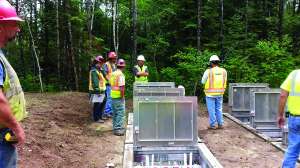
The crew is finishing up the system and the new inspector shows up for the final inspection. This can be a time of stress and worry, because you are not sure what this inspector knows and doesn’t know, or how he or she will react to necessary changes you made during the installation.
At this point, the inspection can go in a number of directions, and many times you may feel you have no way to avoid a problem. Being the professional at all times is the first step. It is also good to remember that inspectors, too, have a job to do and will try to do it to the best of their ability.
Inspector’s goal
The first thing to realize is that you can make yourself part of the problem if you try to sneak changes to the system past the inspector. The goal of the inspection is to make sure the system is installed according to the rules and regulations and in a manner that will ensure its long-term operation.
If you are an installer who only works on the weekends to avoid inspectors, the advice presented here will have little value. In fact, in that event, you are a big part of the problem, and you really need to move into another line of work.
You need to follow the rules for the installation — the location, sizing and design — that are established by the state, enhanced by the local government, and approved by the local inspector. If the system doesn’t meet the setbacks on the site, crossing your fingers and hoping the inspector doesn’t notice is not a good plan for resolving the issues.
As a professional installer, you should meet the requirements as a matter of course, and the inspector should not even have to worry about deviations at your sites. He or she should have confidence that you pay close attention to details and always do things right. It only takes one instance of trying to sneak something through to damage a relationship with your inspector for a long time.
That means even on jobs where you have done everything according to the book, you are in line for extra scrutiny. Instead, you and your crews should set an example for what systems should be like after every project is finished.
Involve designers
If you cannot follow the original design, you should contact the designer for the changes. We have seen a situation where the installer called about the property lines on a site. The owner and the county had identified that the lines were just south of the big oak tree, and the design had used that information to locate the system.
As the installer started working on the site, he saw he would be tight to the property line and recommended it be surveyed. There was no survey available for this smaller lake property. The county inspector said not to worry, since the county had just added GIS capability (a computer-generated survey). Still, the installer was concerned and actually volunteered to pay for the survey in the event he was proven wrong.
The owner paid for the survey, and it showed that the property line was really north of the tree. The system as designed would have been on the neighbor’s yard. And we all know how expensive an issue like that can be become.
The installer here was the hero for all involved. The key to avoiding problems was his professionalism in verifying the property line and coming up with a solution by offering to cover the costs if it had turned out the survey had not been necessary. The local inspector still thanks this installer — and this happened five years ago. Professionalism is noticed, appreciated and rewarded.
Knowing the rules
All of these concerns start with understanding the rules and regulations. This used to be much easier, as the codes were simpler and more straightforward. Available sites were limited, and the choices for systems were fewer. Many see that as the “good old days,” and they may be right, but there is no going back.
Working through the implications and applications of new codes is important. More important is your company working out where you fit within the new regulations and becoming experts in applying them.
For example, if your company is going to focus on difficult small-lot systems, you must work with the inspector to understand how your systems fit into the rule and, more importantly, how your systems solve the problems. If inspectors can understand your approach, it becomes much easier for them to approve your solution.
Remember also that if the rules have changed, the inspector may be learning right along with you at the site. Being patient and clear with your answers can go a long way for a positive outcome.
Another critical skill is to completely understand the design and treatment process involved with the kinds of systems you install. This means being able to describe the operation to the owner and the inspector. Many times, the inspector has heard about the technology or system but has not seen it installed.
This design-to-field implementation is an important step that is difficult for many people to understand. Taking the time to help the inspector understand the system can pay dividends in the long run, as the inspector becomes better at reviewing similar systems on other sites. The time you invest pays off for everyone in the industry.
Knowing personalities
The last part of the discussion is the multiple personalities at the site. Realize that everyone has a personality, and the rub where yours and theirs come together can be a problem. Stepping back from who is there and focusing on the system and site can minimize the friction.
We like to remind people that swearing and yelling do not make you right, and if you are right, a clear explanation will bring this to light faster than cursing. The other side of this was brought home recently when we met an inspector on a site who was carrying a weapon for his work.
Just this spring here in Minne-sota, a person entered a planning and zoning meeting with a gun and held the board hostage until the SWAT team could enter the building. This is not where we want to be as an industry or as professionals — where we have intimidated people to fear for their safety!
The local inspector packing heat just highlighted that it is critical to work professionally with these people, and that this is essential if the industry is to move forward. A big part of being a professional means doing good work, understanding the rules and technology, and being part of the solution by keeping a cool head at inspections or other interactions.
Continue reading for free